Beef Plate Ribs—often called “Dino Ribs”—are the undisputed heavyweights of the barbecue world. They carry the rich, heavily marbled meat of a brisket point, but they sit high on a massive bone.
In the heat of summer, smoking these straight through is a test of patience. In the freezing teeth of a Northern Michigan February, it’s a thermodynamic battle. The cold, dry air strips moisture from the meat, and the “stall” can last for hours.
To beat the winter weather, I deployed the Smoke-Braise Hybrid Method using a cast-iron Dutch oven directly on the Weber Kettle. Here is the Science-First breakdown of how we engineered the perfect bite.
Phase 1: The Bark Build (Convective Heat)
We started with individual bone segments. Instead of an overnight dry brine, I went straight to the seasoning using Morning Woods Double Coffee Texas Rub just 30 minutes before hitting the grates.
Science-First Note: Because this specific rub already contains salt in its blend, I skipped any additional salting to prevent over-salting the meat. This short 30-minute rest allows the salt within the rub to pull out a thin layer of surface moisture, creating a tacky paste with the coffee grounds and coarse pepper that catches smoke instantly.
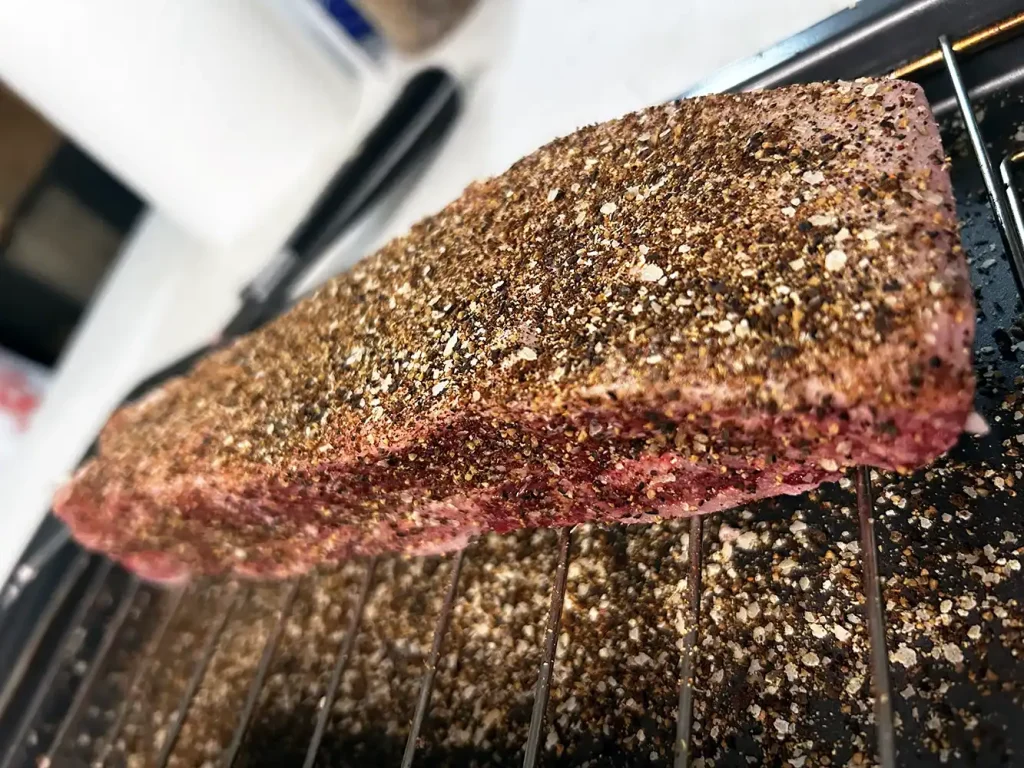
Over a 2×1 charcoal snake running at 275°F, we smoked the ribs until they hit 165°F internal.
- The Science: During this phase, the Kettle acts as a convective oven. The dry heat evaporates surface moisture, allowing the coffee oils and black pepper to polymerize with the oak smoke. We are building the “Bark Architecture” before we introduce liquid.
Phase 2: The Dutch Oven Braise (Hydrolytic Heat)
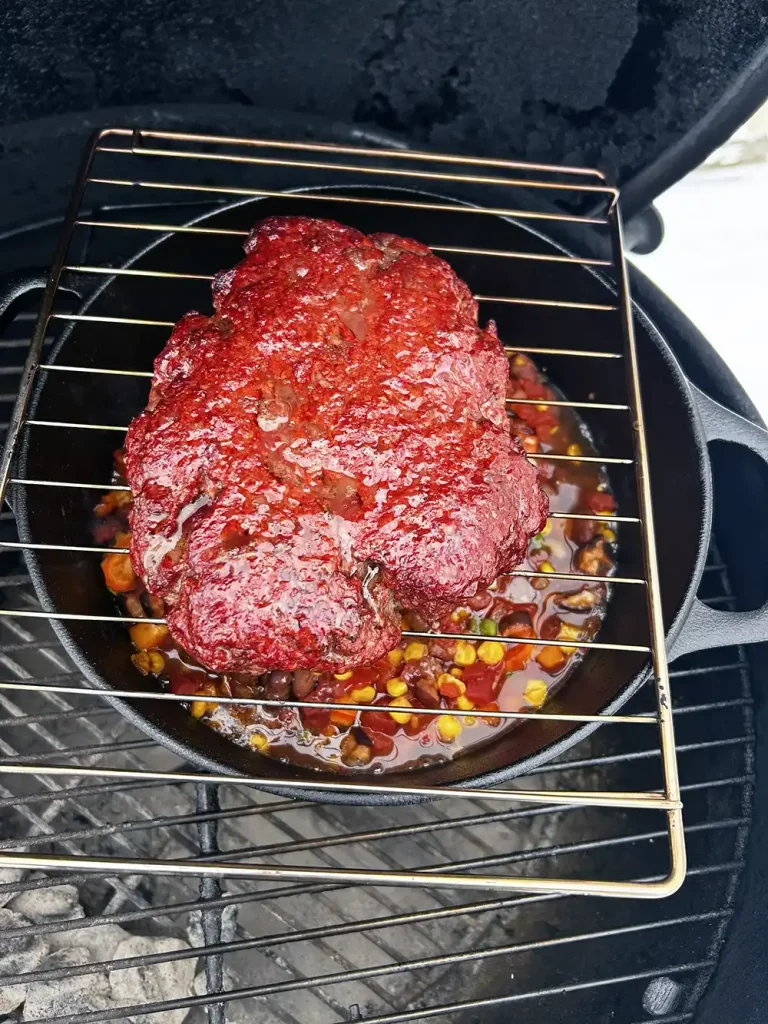
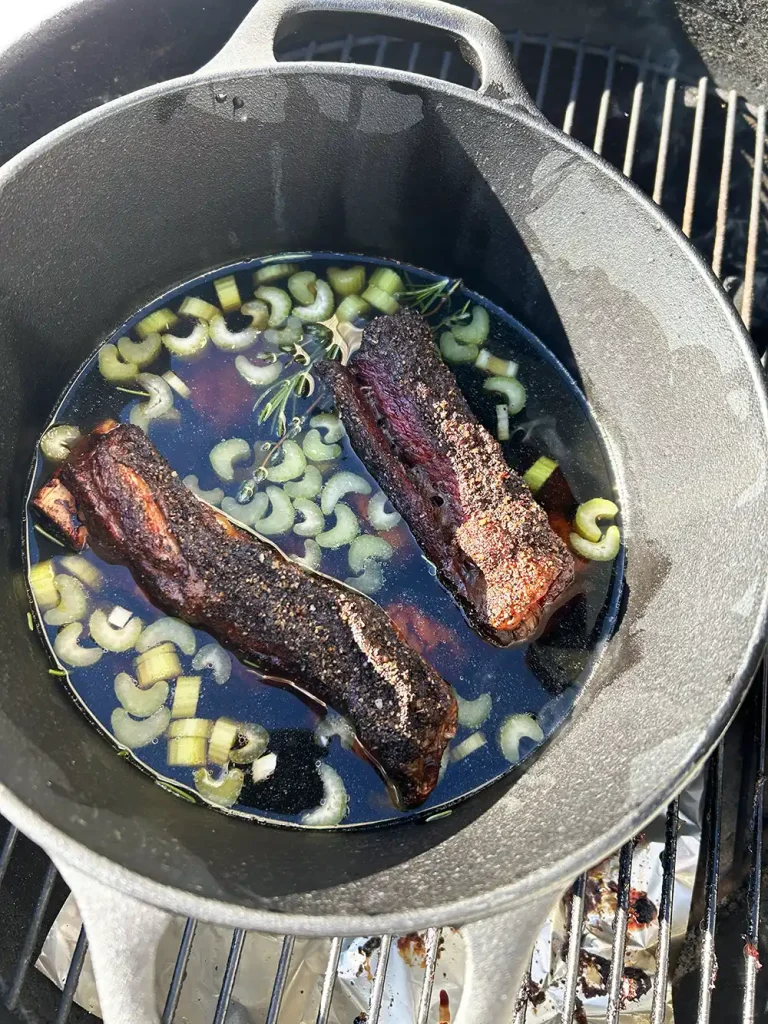
Once the bark was set at 165°F, it was time to change the environment to beat the stall. I transferred the ribs into a pre-heated Dutch oven right on the grill grate. I added beef broth, chopped celery, smashed garlic, and fresh thyme, then clamped the heavy cast-iron lid down.
- The Science: We shifted from dry convection to a hydrolytic (steam) environment. Trapping the moisture creates a localized pressure chamber. The steam conducts heat far more efficiently than dry air, rapidly breaking down the tough collagen in the beef into silken gelatin without drying out the muscle fibers.
Phase 3: The 70-Minute Thermal Step-Down
After about three hours in the 300°F Dutch oven, the ribs hit that magic 203°F-205°F threshold where a probe slides in like warm butter.
But the most critical step happened off the fire. I pulled the Dutch oven and let it sit on the counter for 1 hour and 10 minutes.
- The Science: Cast iron holds massive thermal energy. By letting the meat rest inside the cooling pot, the temperature stepped down gradually. This allowed the muscle fibers to relax and reabsorb the rendered fats.
The Harvest
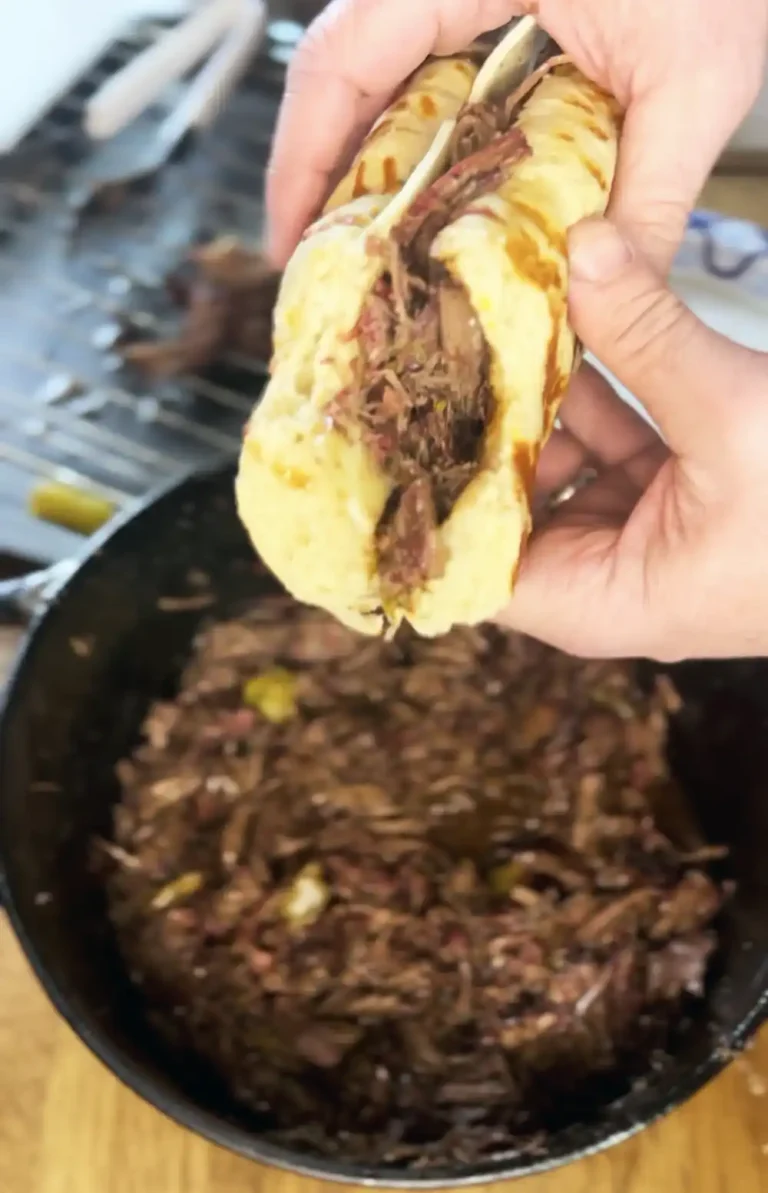
The byproduct of this method is the ultimate au jus. By straining the leftover liquid in the pot and skimming the fat, we were left with a rich, smoky, coffee-and-thyme-infused beef reduction. Spooned over the top of the ribs, it’s a flavor profile you simply cannot achieve with a standard foil wrap.
Master the fire. Trust the science.
— Tom
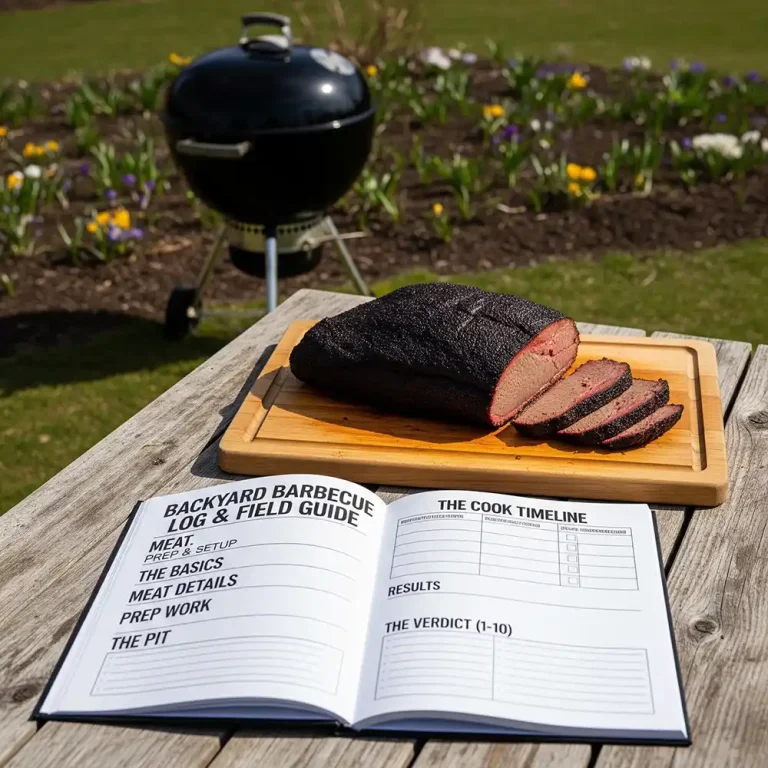
👉 Order your copy of the Backyard Barbecue Log and Field Guide on Amazon
Kettle-Braised Beef Plate Ribs (Smoke-Braise Hybrid)
Equipment
- 1 22-inch Weber Kettle Configured for indirect heat (Snake method)
- 1 Cast Iron Dutch Oven The ultimate thermal tool for beating the winter stall.
- 1 Meat Probe Essential for monitoring the 165°F transfer point and the 205°F finish.
- B&B Briquettes Set up in a 2×1 snake configuration.
Ingredients
- 2 Rack Beef Ribs (3-4 bones) Score the membrane.
- .33 Cup Morning Woods Double Coffee Texas Rub Applied 30 minutes pre-cook.
- 1 Cup Beef Broth The braising liquid base.
- 4 Ribs Celery Roughly chopped for aromatics.
- 2 Cloves Garlic Smashed to release oils.
- 1 Sprig Fresh Thyme Adds and earthy herbal note to the final jus.
Instructions
- The 30-Minute Prep: Trim the top fat cap of the ribs down to 1/8 inch. Keep the bottom membrane intact, but score it with a knife. Slice the rack into individual bone segments. Apply the Morning Woods Double Coffee Texas Rub heavily to all four sides. Let the ribs sit at room temperature for 30 minutes. The Science: Because this commercial rub already contains salt, skipping a separate dry brine prevents over-salting the meat. This brief resting period allows the salt within the rub to draw out a thin layer of surface moisture, forming a tacky paste with the coffee and pepper to jumpstart bark formation before it even hits the heat.
- The Convective Smoke (Phase 1): Set up a 2×1 charcoal snake in the Kettle. Aim for an ambient temp of 250°F-275°F. Place the ribs on the indirect side and smoke until the internal temperature hits 165°F.
- The Hydrolytic Braise (Phase 2): Pre-heat your Dutch oven on the grill. Transfer the ribs into the pot. Pour in the beef broth and add the celery, smashed garlic, and thyme. Clamp the lid on tight. The Science: Trapping the steam rapidly breaks down tough collagen into gelatin without evaporating the internal moisture of the meat.
- The Thermal Finish: Keep the Kettle running around 300°F. Cook the covered ribs for roughly 3 hours, checking periodically. Pull the pot off the heat when the meat is probe tender and registers between 203°F and 205°F.
- The Cast Iron Rest: Leave the ribs inside the covered Dutch oven, sitting on the counter, for 1 hour and 10 minutes. The Science: The heavy cast iron slowly steps the temperature down, allowing muscle fibers to relax and retain the rendered fats.
- The Harvest: Gently remove the ribs. Strain the remaining liquid in the pot through a mesh sieve, let the fat separate, and skim it off. Serve the ribs with the hot, concentrated au jus ladled over the top.
Notes
- Logbook Entry: Document the exact duration of your “Dutch Oven Phase.” Plate ribs have varying fat densities; noting how long it took to go from 165°F to probe tender will help you predict your fuel needs for the next cook. Note your use of the Morning Woods rub so you know to skip the salt step next time!
- Sub-Zero Tip: By moving the meat into a heavy cast-iron Dutch oven for the second half of the cook, you create a “thermal shield.” Even if the Michigan wind spikes and drops your Kettle temperature temporarily, the thermal mass of the iron will protect the braise from staling out.