Kettle-Braised Beef Plate Ribs (Smoke-Braise Hybrid)
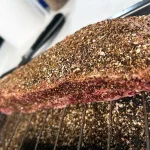
A Science-First approach to tackling massive "Dino Ribs" in cold weather. By utilizing a Weber Kettle for the initial smoke and a cast-iron Dutch oven for the braising phase, we achieve an obsidian bark and fall-apart tender meat swimming in a rich, aromatic jus.
Servings: 2 Servings
Cost: 22.00
Equipment
- 1 22-inch Weber Kettle Configured for indirect heat (Snake method)
- 1 Cast Iron Dutch Oven The ultimate thermal tool for beating the winter stall.
- 1 Meat Probe Essential for monitoring the 165°F transfer point and the 205°F finish.
- B&B Briquettes Set up in a 2x1 snake configuration.
Ingredients
- 2 Rack Beef Ribs (3-4 bones) Score the membrane.
- .33 Cup Morning Woods Double Coffee Texas Rub Applied 30 minutes pre-cook.
- 1 Cup Beef Broth The braising liquid base.
- 4 Ribs Celery Roughly chopped for aromatics.
- 2 Cloves Garlic Smashed to release oils.
- 1 Sprig Fresh Thyme Adds and earthy herbal note to the final jus.
Instructions
- The 30-Minute Prep: Trim the top fat cap of the ribs down to 1/8 inch. Keep the bottom membrane intact, but score it with a knife. Slice the rack into individual bone segments. Apply the Morning Woods Double Coffee Texas Rub heavily to all four sides. Let the ribs sit at room temperature for 30 minutes. The Science: Because this commercial rub already contains salt, skipping a separate dry brine prevents over-salting the meat. This brief resting period allows the salt within the rub to draw out a thin layer of surface moisture, forming a tacky paste with the coffee and pepper to jumpstart bark formation before it even hits the heat.
- The Convective Smoke (Phase 1): Set up a 2x1 charcoal snake in the Kettle. Aim for an ambient temp of 250°F-275°F. Place the ribs on the indirect side and smoke until the internal temperature hits 165°F.
- The Hydrolytic Braise (Phase 2): Pre-heat your Dutch oven on the grill. Transfer the ribs into the pot. Pour in the beef broth and add the celery, smashed garlic, and thyme. Clamp the lid on tight. The Science: Trapping the steam rapidly breaks down tough collagen into gelatin without evaporating the internal moisture of the meat.
- The Thermal Finish: Keep the Kettle running around 300°F. Cook the covered ribs for roughly 3 hours, checking periodically. Pull the pot off the heat when the meat is probe tender and registers between 203°F and 205°F.
- The Cast Iron Rest: Leave the ribs inside the covered Dutch oven, sitting on the counter, for 1 hour and 10 minutes. The Science: The heavy cast iron slowly steps the temperature down, allowing muscle fibers to relax and retain the rendered fats.
- The Harvest: Gently remove the ribs. Strain the remaining liquid in the pot through a mesh sieve, let the fat separate, and skim it off. Serve the ribs with the hot, concentrated au jus ladled over the top.
Notes
- Logbook Entry: Document the exact duration of your "Dutch Oven Phase." Plate ribs have varying fat densities; noting how long it took to go from 165°F to probe tender will help you predict your fuel needs for the next cook. Note your use of the Morning Woods rub so you know to skip the salt step next time!
- Sub-Zero Tip: By moving the meat into a heavy cast-iron Dutch oven for the second half of the cook, you create a "thermal shield." Even if the Michigan wind spikes and drops your Kettle temperature temporarily, the thermal mass of the iron will protect the braise from staling out.