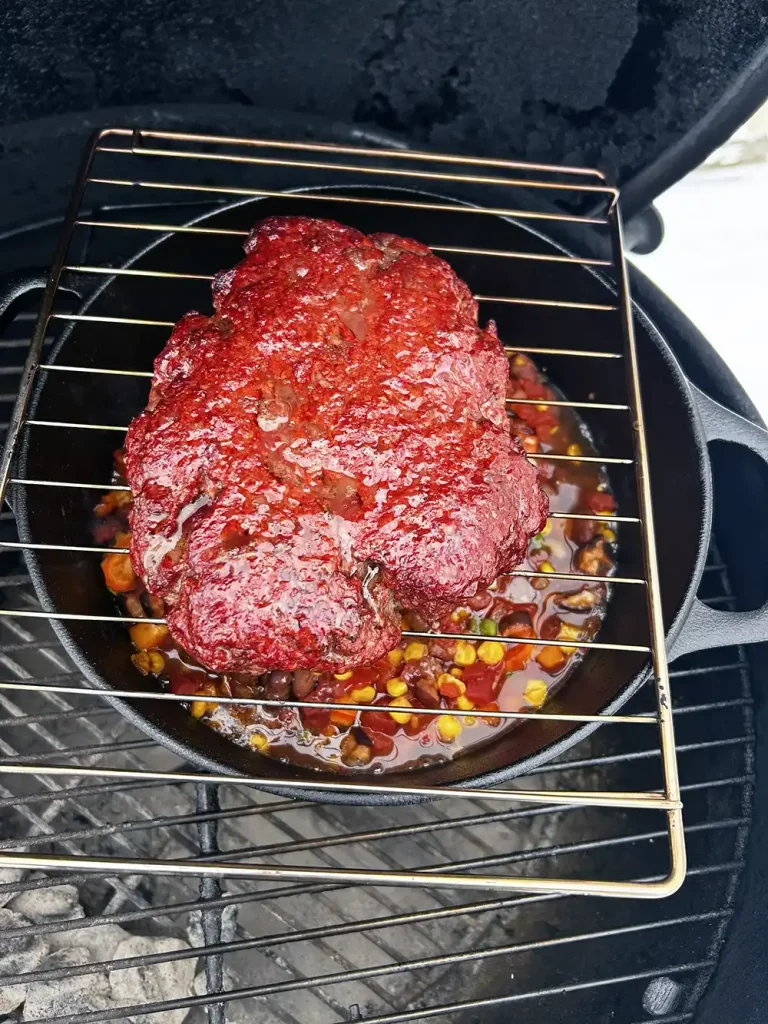
When the Northern Michigan winter sets in, chili isn’t just a meal—it’s a survival strategy. But in the “Kettle Kitchen,” we don’t just dump ground beef into a pot on the stove and call it a day. We use thermodynamics, gravity, and wood smoke to engineer something entirely different.
This week, I fired up the 22-inch Weber Kettle for my Smoked Over-The-Top (OTT) Umami Chili. If you’ve never seen the OTT method, it might look a little crazy at first—suspending a giant, seasoned meatball directly over a Dutch oven full of beans and tomatoes. But there is some serious science happening inside that Kettle.
Here is the breakdown of how we built this cold-weather masterpiece.
The Physics of the “Drip”
In a standard stovetop chili, you brown the 80/20 ground beef in a skillet. Most of that rich beef fat just pools in the pan, and you end up draining it away.
With the OTT method, we form that ground beef into a large, flat ball and place it on a wire rack directly over the uncovered Dutch oven.
- The Science: As the ambient 250°F heat of the Kettle renders the beef, gravity goes to work. The rendering tallow—now infused with oak smoke and the spices from the rub—drips continuously into the chili base below. The meat essentially acts as a self-basting, smoky flavor engine for the stew.
The Umami Synergy (The Shiitake Hack)
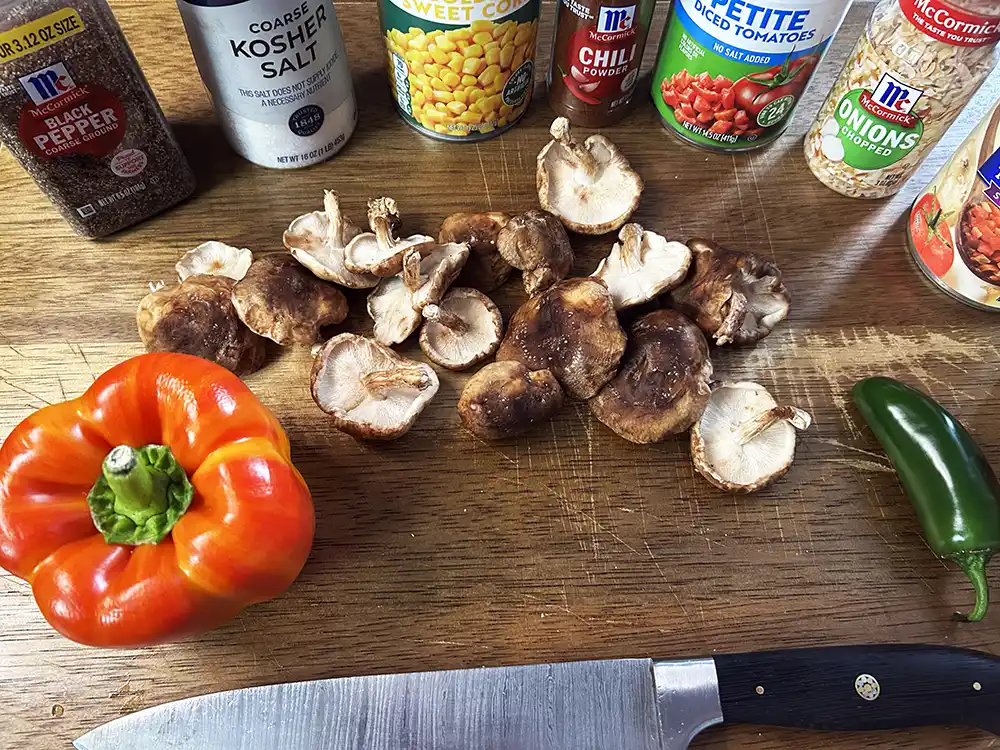
If you look at the prep photos, you’ll notice an ingredient that isn’t in your grandmother’s chili recipe: Shiitake Mushrooms.
- The Science: Tomatoes and beef are packed with glutamate. Shiitake mushrooms are packed with a different compound called guanylate. When you combine the two, you trigger “Umami Synergy.” The human palate perceives this combination as exponentially more savory than either ingredient on its own.
As that hot, smoked beef tallow drips down into the Dutch oven, it breaks down the chitin cell walls of the chopped shiitakes, releasing their deep, earthy flavor into the base.
The Smoke and the Crumble
I ran the Kettle using a steady snake method, allowing the meatball to bathe in the smoke until it developed a deep, mahogany bark.
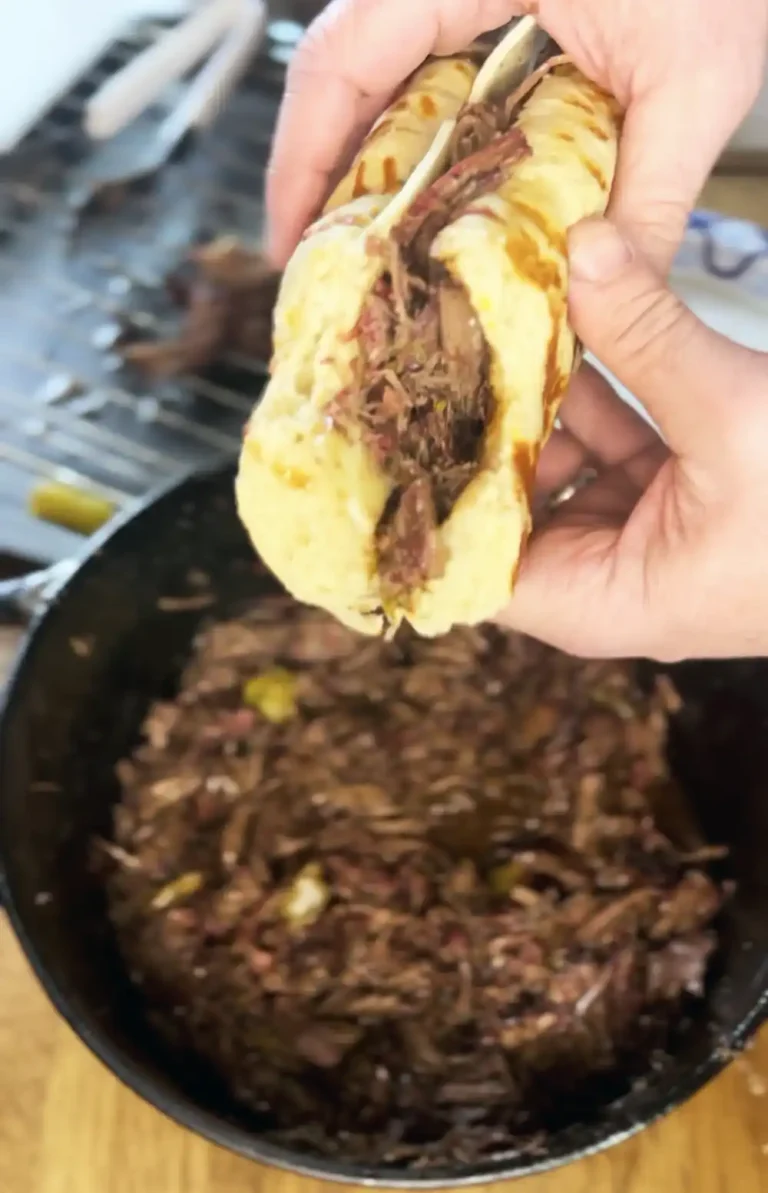
Once the meat hit an internal temperature of 150°F, the magic happened. I pulled the meat off the grate, crumbled it up, and stirred those smoke-ringed, bark-heavy chunks directly into the bubbling Dutch oven to finish cooking.
The result is a chili that is impossibly rich, perfectly textured, and carries the distinct signature of a Northern Michigan wood fire.
Master the fire. Trust the science.
— Tom
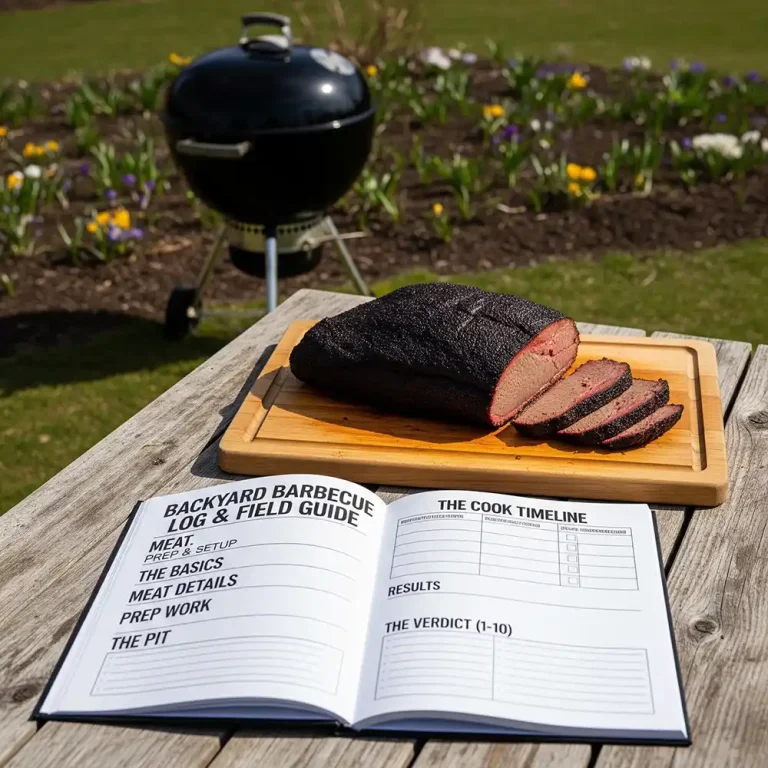
👉 Track your cold-weather cooks with the Backyard Barbecue Log and Field Guide on Amazon!
Smoked Over-The-Top (OTT) Chili
Equipment
- 1 22-inch Weber Kettle Set up for a stable 250°F ambient temp using the snake method.
- 1 Cast Iron Dutch Oven The thermal mass vessel that will catch the smoked drippings.
- 1 Wire Cooling Rack Used to suspend the meatball over the Dutch oven.
Ingredients
- 2 lbs 80/20 Ground Beef The high fat content is crucial for the "drip" effect.
- 1 tbsp Chili Powder For the meatball surface.
- 1 tsp Garlic Powder For the meatball surface.
- 1 tsp Kosher Salt & Coarse Black Pepper For the meatball surface.
- 1 Can Chili Beans (Mild) Do not drain.
- 1 Can Whole Kernel Sweet Corn Drained.
- 1 Can Petite Diced Tomatoes Do not drain.
- 1 Whole Bell Pepper Diced to remove vegetal sweetness.
- 1 Whole Jalapeño Finely diced. Keep seeds for heat (optional).
- 4 oz Shiitake Mushrooms Stems removed, caps roughly chopped. The guanylate source.
- 2 Cloves Fresh Garlic Minced.
- 2 tbsp Dehydrated Onions Rehydrates perfectly in the tomato juices.
- 1 tbsp Cumin The earthy backbone.
- 1 tbsp Chili Powder Because it's chili!
Instructions
- The Base Assembly: Dice your fresh bell pepper, jalapeño, shiitakes, and mince the garlic. In your Dutch oven, combine all the canned goods (draining only the corn), the fresh peppers, shiitakes, minced garlic, dehydrated onions, cumin, and the remaining chili powder. Stir gently.
- The Meatball Formation: In a bowl, gently mix the ground beef with 1 tbsp chili powder, 1 tsp garlic powder, salt, and pepper. Form it into a large, slightly flattened ball. The Science: Keeping it flat increases the surface area for maximum smoke adhesion (Maillard reaction) and provides a wider drip radius over the pot.
- The Kettle Geometry: Set up your Weber Kettle with a snake method for 250°F. Place the uncovered Dutch oven on the indirect side. Place your wire rack over the Dutch oven, and place the seasoned meatball directly centered over the pot.
- The Smoke Phase: Add wood chunks (oak or hickory) to the coals. Close the lid and maintain ambient temps. The Science: As the ambient heat renders the 80/20 beef, gravity pulls the smoked tallow directly into the chili base. This hot beef fat breaks down the chitin walls of the shiitakes, extracting their flavor into the stew.
- The Thermal Pull: Smoke the meatball until the internal temperature reaches 150°F (roughly 1.5 to 2 hours).
- The Crumble & Integration: Once the beef hits 150°F and has a dark mahogany bark, transfer the meat to a cutting board. Chop and crumble it, then stir the smoked beef directly into the Dutch oven.
- The Simmer: Move the Dutch oven over the remaining coals. Let the integrated chili simmer for another 30 to 45 minutes until the beef safely reaches 165°F and the liquid reduces to a thick, glossy consistency. Simmer longer as needed.
Notes
- Logbook Entry: In your Backyard Barbecue Log & Field Guide, record your snake configuration and ambient temps. Note the exact time it took the meatball to hit the 150°F mark.
- Sub-Zero Tip: The cast iron Dutch oven absorbs a massive amount of thermal energy. In the freezing Michigan winter, this heat sink can cause your Kettle’s ambient temperature to drop initially. Keep your bottom vents 100% open until the cast iron comes fully up to temperature, then dial it back to hold 250°F.