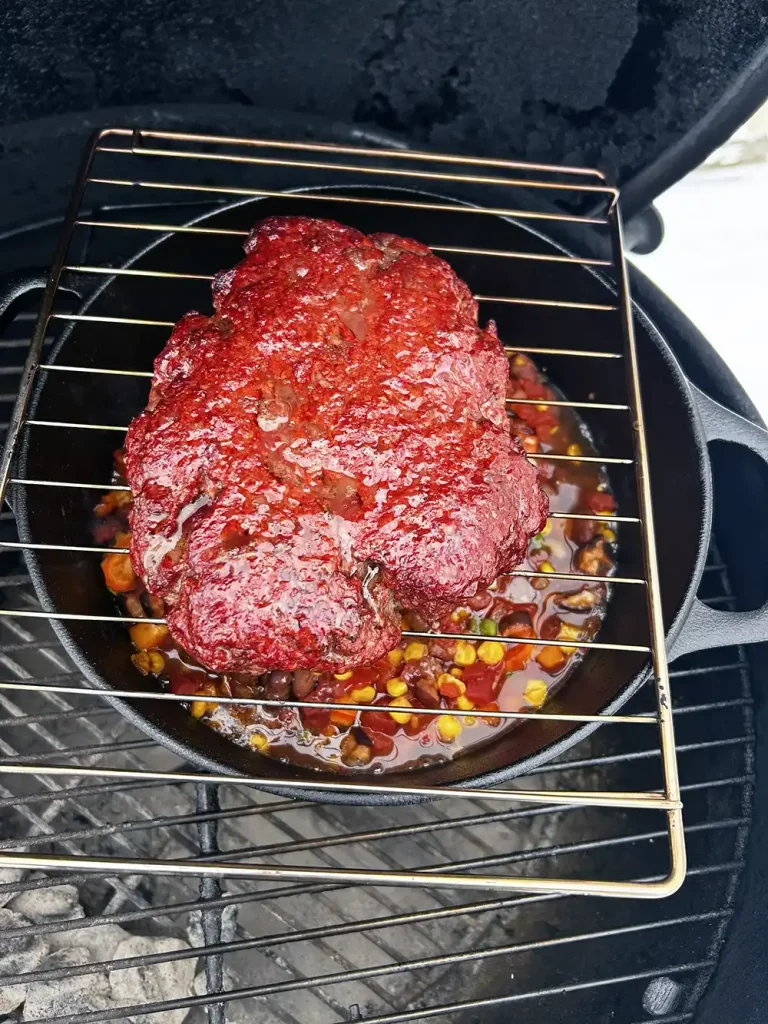
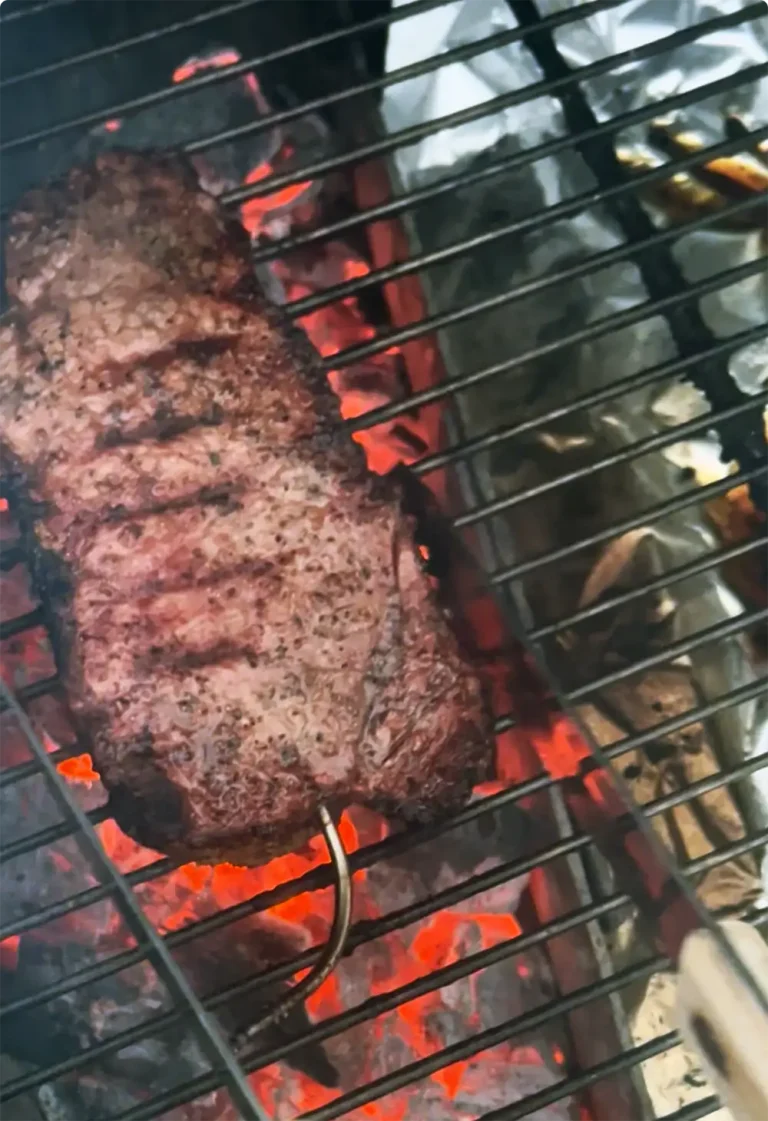
It was one of those January nights in Bear Lake where the air feels like it has teeth. I was standing over my 22-inch Kettle, my headlamp cutting through the blowing snow, watching the digital glow of my remote probe. I’d spent forty bucks on a beautiful thick-cut roast, and in my mind, I was just waiting for that “magic” 135°F number to show up on the screen.
The second it hit, I pulled that roast off the grates, shielded it from the wind, and ran it into the warmth of my 71°F kitchen. I felt like a hero. But fifteen minutes later, when I sliced into it, the “edge-to-edge pink” I’d promised was a muddy, overcooked gray.
I’d been betrayed by the one thing I thought I could trust: the thermometer.
What I didn’t account for was the “ghost in the machine”—the invisible energy still surging through the meat fibers even after they left the fire. In the “Kettle Kitchen” of Northern Michigan, we don’t just cook by the number; we cook by the trajectory. We cook by Thermal Momentum.
The Physics of the “Internal Heat Reservoir”
When you are grilling a high-mass cut—like the 2-inch thick NY Strip roast we recently scouted—you are essentially charging a thermal battery.
While the center of the meat might read 115°F at the “pull” moment, the exterior layers sitting directly against the convection current of the Kettle are significantly hotter—often exceeding 200°F. When you remove the meat from the heat source, that energy doesn’t just disappear into the Michigan air. It continues to travel inward toward the area of lower energy (the center).
- The 2-Inch Rule: A steak with significant mass (2 inches or more) has a massive internal heat reservoir. In my recent arbitrage cook, pulling at 115°F resulted in a final resting temperature of 123°F – 125°F.
- The Math: For every inch of thickness, you can expect an additional 3°F to 5°F of carry-over rise. If you wait until 135°F to pull a thick NY Steak, you’ll be eating a medium-well steak by the time it finishes its rest on the counter.
The Northwoods Angle: The 70°F Delta
In Northern Michigan, we have a unique variable: the Thermal Gradient between the backyard and the kitchen.
If it is 1°F outside and you bring a hot roast into a 71°F kitchen, you are effectively shielding that thermal battery. In the sub-zero air, the exterior of the meat would normally be “quenched,” which halts thermal momentum quickly. However, the second you step through that sliding glass door into the heat, you allow the internal energy to continue its inward march more efficiently.
The Strategy: In the Northwoods, you must pull the meat 2°F to 3°F sooner than you would in the summer. The move to the warm kitchen accelerates the carry-over rise compared to a cook that rests in the ambient outdoor air of July.
The Brisket Exception: Temperature vs. “Probe Tender”
For high-collagen cuts like Brisket or Pork Butt, temperature is only half the story. While we look for 203°F as our goal, the thermometer is just a guide—feel is the absolute authority.
- The Science: Connective tissue doesn’t just melt at a specific degree; it requires a combination of Time and Temperature. A brisket might hit 203°F but still be “tight” because the collagen hasn’t fully converted to gelatin.
- The Test: You must use your probe to test for Probe Tenderness. Push your thermometer or a blunt probe into the thickest part of the flat.
- The Goal: It should slide in with zero resistance, like a toothpick into room-temperature butter. If it hits 203°F but still has “push back,” your thermal momentum hasn’t finished the job. Leave it on until it’s butter-soft, regardless of the number on the screen.
The “Long Rest”: From Momentum to Mastery
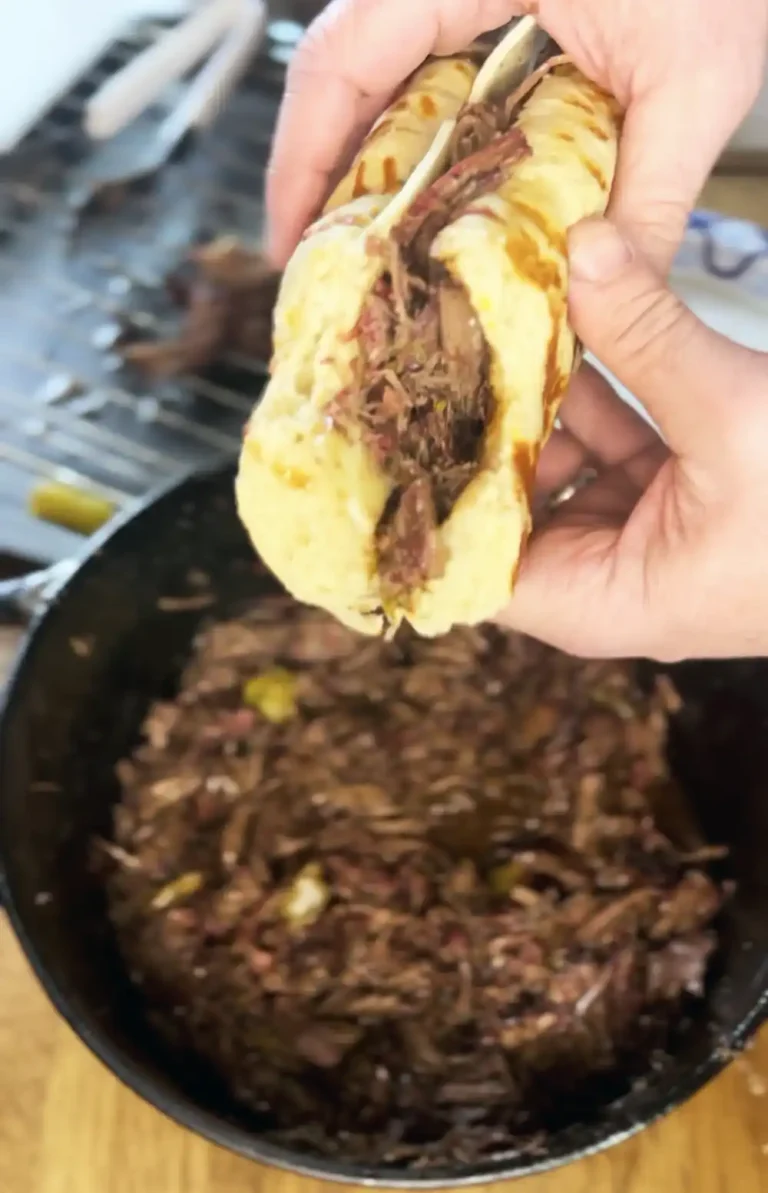
Once the momentum has peaked and the meat is “Probe Tender,” we enter the Long Rest. For larger roasts like a Brisket or a Pork Butt, the “3-Hour Nap” in a towel-lined cooler is where the moisture redistributes.
- Collagen Transition: During the rest, the internal temperature stays high enough to continue the gelatin conversion without drying out the muscle fibers. This is why a rested Pork Butt pulls apart with zero resistance while an unrested one feels “stringy” and tight.
The Science-First Pull Protocol
To master your cooks, stop looking for the “Done” number. Look for the Pull Number based on this momentum scale:
- Thin Cuts (Under 1 inch): Minimal momentum. Pull within 2°F of target.
- Standard Steaks (1.5 inches): Pull 5°F early.
- Heavy Roasts (2+ inches): Pull 8°F to 10°F early.
- Brisket/Pork Butt: Pull at 198°F – 200°F ONLY IF it passes the butter test. If it’s not “Probe Tender,” the cook isn’t over.
Log Your Momentum
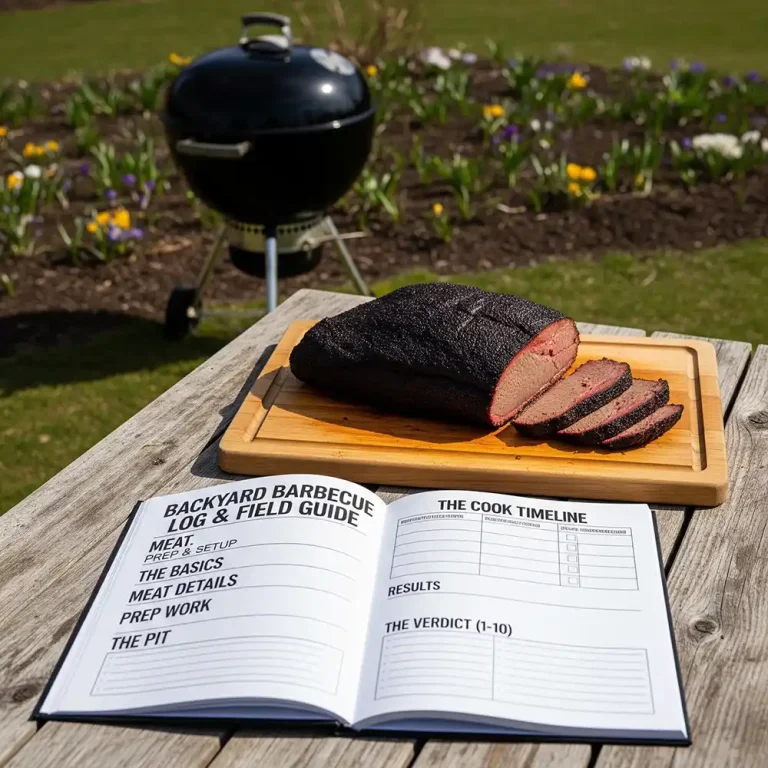
Every time you pull a piece of meat, record the Pull Temp, the Probe Feel, and the Peak Rest Temp in your Backyard Barbecue Log & Field Guide.
Tracking this “delta” is the only way to calibrate your specific Kettle to the Michigan seasons. If you aren’t measuring the momentum, you aren’t mastering the fire.
Master the fire. Trust the science.
— Tom
👉 Order your copy of the Backyard Barbecue Log and Field Guide on Amazon