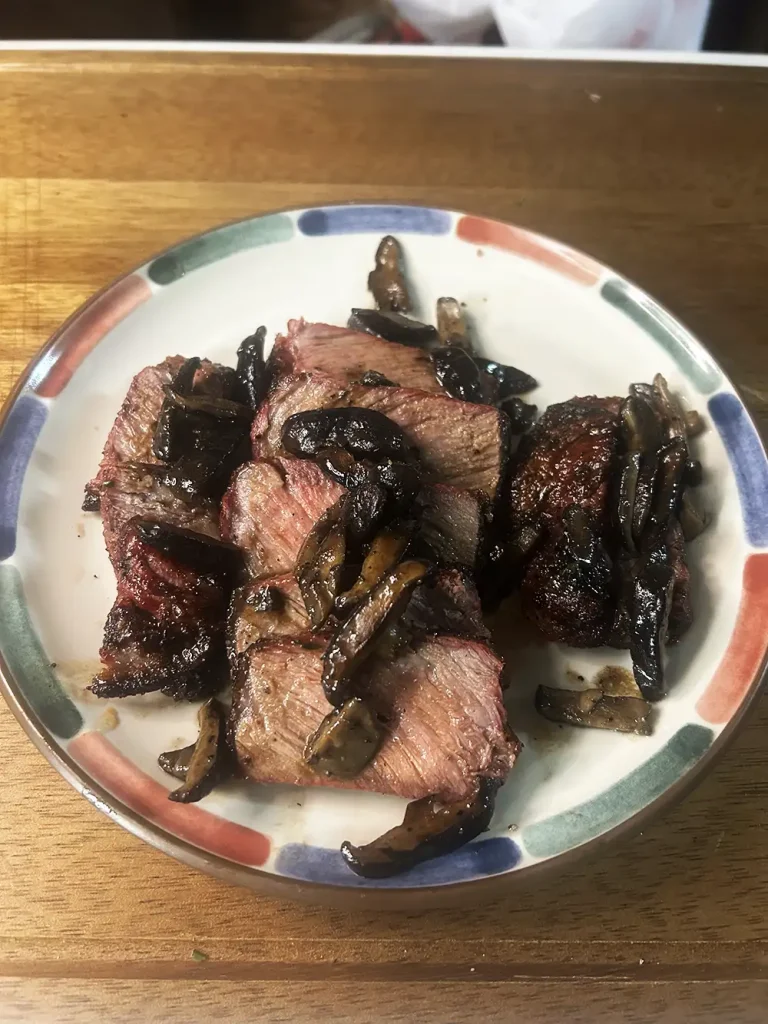
In Northern Michigan, we know that “Value” isn’t just about finding the cheapest price—it’s about finding the highest quality for the best technical investment.
Today, we’re looking at a simple piece of “Science-First” math: The NY Strip Roast Arbitrage.
The Economics of the Cut
I recently scouted a NY Strip Roast at the butcher counter for $10.99/lb. Right next to it, the individual NY Strip steaks were sitting at $17.99/lb.
By purchasing the roast and doing five minutes of knife work myself, I saved $7.00 per pound. On a 5lb roast, that’s $35 staying in my pocket—or essentially paying for the charcoal and a couple of bags of Shiitakes for the month.
The Technical Processing
I took a 4-inch thick roast and bisected it into two massive, 2-inch thick “Scout’s Portion” steaks.
- The Strategy: I cooked one immediately and vacuum-sealed the second for the freezer.
- The Science: Vacuum sealing removes oxygen, preventing the ice-crystal formation (freezer burn) that destroys the cell structure of the meat. This preserves that “fresh-cut” texture for a future cook.
Recipe: The 2-Zone Reverse Sear NY Strip
With Shiitake & Herb Reduction
The $7/lb Arbitrage: Reverse-Sear NY Strip with Shiitake-Herb Reduction
Equipment
- 1 22-inch Weber Kettle Set up for 2-zone indirect cooking with B&B charcoal.
- 1 Digital Meat Probe Essential for tracking the 115°F threshold without peeking.
- 1 Cast Iron Skillet Used for the mushroom reduction.
Ingredients
- 1 lb NY Strip Steak Cut 2-inches thick from a 4-inch roast.
- 2 tsp Kosher Salt To taste
- 1 tsp Coarse Black Pepper To taste
- 1 tsp Garlic Powder For the savory baseline
- 8 oz Shiitake Mushrooms Thick-sliced
- 2 tbsp Butter High-quality salted butter
- .5 cup Beef Broth Can substitute with strong black coffee
- .25 tsp Fresh Rosemary Finely chopped
- .25 tsp Fresh Thyme Finely chopped
- 1 pinch Salt and Pepper To taste for the sauce
Instructions
- The Arbitrage Butchery: Take your 4-inch NY Strip Roast and bisect it into two identical 2-inch steaks. Vacuum seal the second steak immediately. The Science: You are capturing the wholesale-to-retail price spread, saving roughly $7/lb.
- Seasoning (S&P&Gp): Apply the Kosher salt, black pepper, and garlic powder to all sides of the steak. Let it sit at room temperature for 45 minutes. The Science: This allows the salt to penetrate the muscle fibers, improving moisture retention.
- The Smoke (Phase 1): Place the steak on the indirect (cool) side of the Kettle. Close the lid and monitor the internal temperature. Pull at 115°F. The Science: Reverse-searing at low temps ($225°F-$250°F) ensures the interior fat renders without overcooking the outer layers.
- The Sauté (Indoor): While the steak is on the Kettle, heat the cast-iron skillet on the stove over medium-high heat. Add butter and brown the shiitakes until they are deeply golden.
- The Simmer-Infusion: Pour in the beef broth and immediately add the finely chopped rosemary and thyme. The Science: Adding herbs to the liquid allows for a simmer-infusion, extracting water-soluble aromatic compounds into the sauce.
- The Reduction: Season with salt and pepper to taste. Turn the heat to low and let the liquid reduce by half until it reaches a "nappe" consistency (coats the back of a spoon).
- The Sear (Phase 2): Move the steak directly over the hot coals on the Kettle. Sear for 60-90 seconds per side. The Science: The high-intensity infrared heat triggers the Maillard Reaction, creating a dark, savory crust on the S&P&Gp base.
- The Rest: Remove the steak and let it rest for 10 minutes. The Science: Resting allows the internal pressure to equalize, ensuring the juices stay in the meat when sliced.
- Service: Slice the NY Strip into medallions and spoon the hot Shiitake-Herb reduction over the top.
Notes
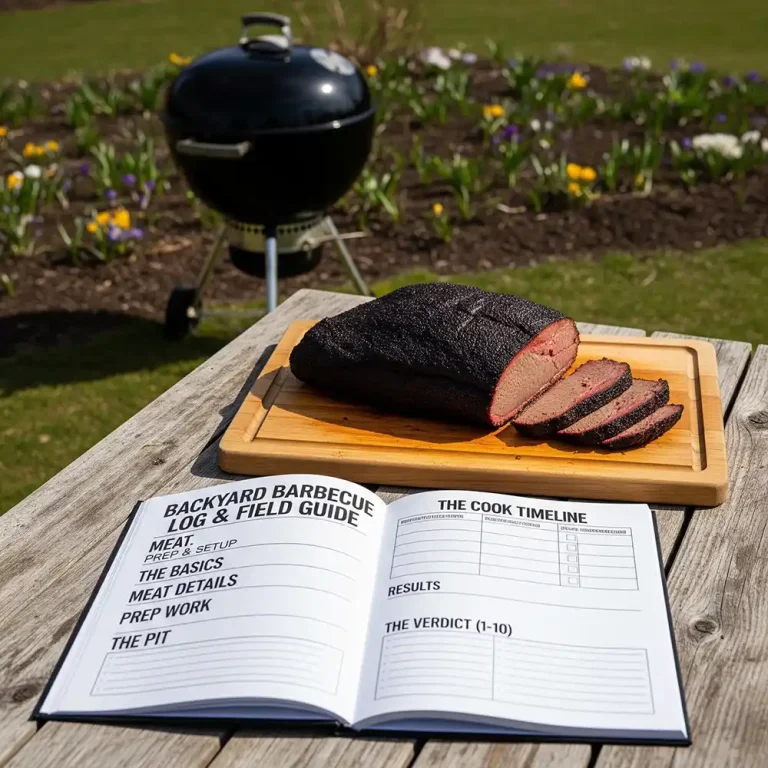
- Logbook Entry: Make sure to record the final thickness of your cut and the “Carry-over Rise” in your Backyard Barbecue Log & Field Guide.
- Sub-Zero Tip: In Michigan winter weather ($0°F – 10°F), move the sear phase to the very end and bring the steak inside immediately after it leaves the coals to prevent the fat from seizing in the cold air.
Tom’s Logbook Note:
When you buy the roast, you control the thickness. A 2-inch steak has enough Thermal Mass to handle a high-heat sear without overcooking the center. Record your “Indirect-to-Direct” transition time in your Field Guide to perfect your timing for the next roast.
Master the fire. Trust the science. Save the money.