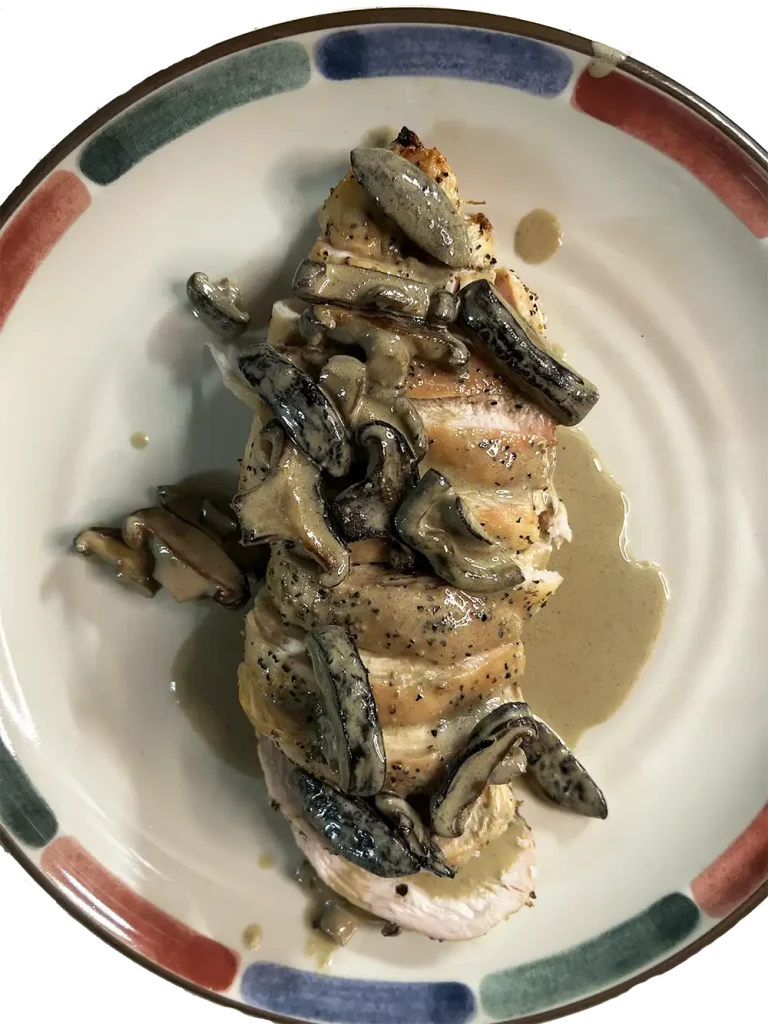
It is January 2026 in Northern Michigan, and the mercury is struggling to stay above the zero-degree mark. For most people, this is “indoor oven” weather. But for the Science-First Pitmaster, a 0°F to 8°F ambient temperature isn’t a reason to stop grilling—it’s a reason to get technical.
Grilling in extreme cold changes the physics of your Kettle. Today, we’re breaking down the workflow for indirect-grilled chicken breast paired with a high-viscosity indoor Shiitake-Coffee cream sauce.
The Sub-Zero Survival Tips: Thermodynamics in the Cold
When you’re fighting single-digit temps, you have to manage your Thermal Equilibrium with military precision.
- The “No-Peek” Mandate: At 0°F, opening your Kettle lid isn’t just “losing heat”—it’s a thermal disaster. It can take 10-15 minutes for a 22-inch Kettle to recover its internal convection temp after a 10-second peek. If you’re lookin’, you ain’t cookin’, and your charcoal is burning twice as fast to compensate.
- Trust the Wireless Intel: This is where a high-heat remote probe (like the CHEF iQ Sense) becomes a safety tool. You need to monitor the Thermal Path from inside the house.
- Fuel Density: In this weather, I rely on B&B Briquettes for their consistent, long-duration burn. You’ll need about 20% more fuel than a summer cook to maintain a 350°F indirect zone.
The Method: Indirect Chicken (No-Sear Strategy)
Sub-Zero Protocol: Indirect Chicken with Shiitake-Coffee Cream Sauce
Equipment
- 1 22-inch Weber Kettle Set up for a 350°F indirect zone
- 1 Digital Meat Probe Critical "Safety Tool" to monitor internal temps without opening the lid.
- 1 Cast Iron Skillet Used for the Mushroom Sauce
- 1 B&B Briquettes Use 20% more fuel than usual to maintain thermal equilibrium.
Ingredients
- 2 Each Chicken Breasts Boneless/Skinless
- 1 tbsp Olive Oil Used as a binder.
- 1 tbsp S&P7GP Standard Salt, Pepper, Garlic Powder blend.
- 8 oz Shiitake Mushrooms Thick-sliced for maximum surface area.
- 2 tbsp Butter Split into two 1-sbsp portions.
- .5 cup Strong Black Coffee For roasted depth and deglazing.
- 1 tsp Yellow Mustard The technical emulsifier (Lecithin).
- .25 cup Heavy Cream For a silky finish.
- .5 tsp Garlic Powder For the sauce baseline.
- .5 tsp Coarse Black Pepper For the sauce.
Instructions
- The Indirect Setup: Fire your Kettle using a 2-zone setup. Aim for an ambient temp of 350°F. The Science: In extreme cold, we skip the sear to avoid thermal shock, which can cause muscle fibers to tighten and expel moisture.
- The No-Peek Protocol: Lightly coat chicken in olive oil and S&P&Gp. Insert your wireless probe and place on the indirect side. Close the lid and do not open it until the probe hits your target. The Science: Opening the lid at 0°F causes a thermal disaster; it can take 15 minutes for the Kettle to recover its convection environment.
- The Maillard Sauté (Indoor): While the chicken cooks outside, heat 1 tbsp butter in a cast-iron skillet on the stove. Sauté shiitakes until deeply browned.
- The Coffee Deglaze: Pour in the coffee to lift the fond from the pan. Turn the heat to low.
- The Mustard Bridge: Whisk in the yellow mustard. The Science: The lecithin in the mustard acts as the secret "glue" that allows the acidic coffee and heavy cream to bond without curdling.
- The Silky Finish: Whisk in the heavy cream and the final "cold" pat of butter (monter au beurre) for a high-gloss finish. Keep on low heat.
- The Thermal Pull: When the remote probe hits 160°F – 162°F, bring the chicken inside immediately.
- The Rest: Let the chicken rest for 8 minutes. The Science: Carry-over cooking in a 70°F room will push the internal temp to the final 165°F mark.
- The Assembly: Slice the chicken and immediately drape with the hot Shiitake-Coffee cream sauce.
Notes
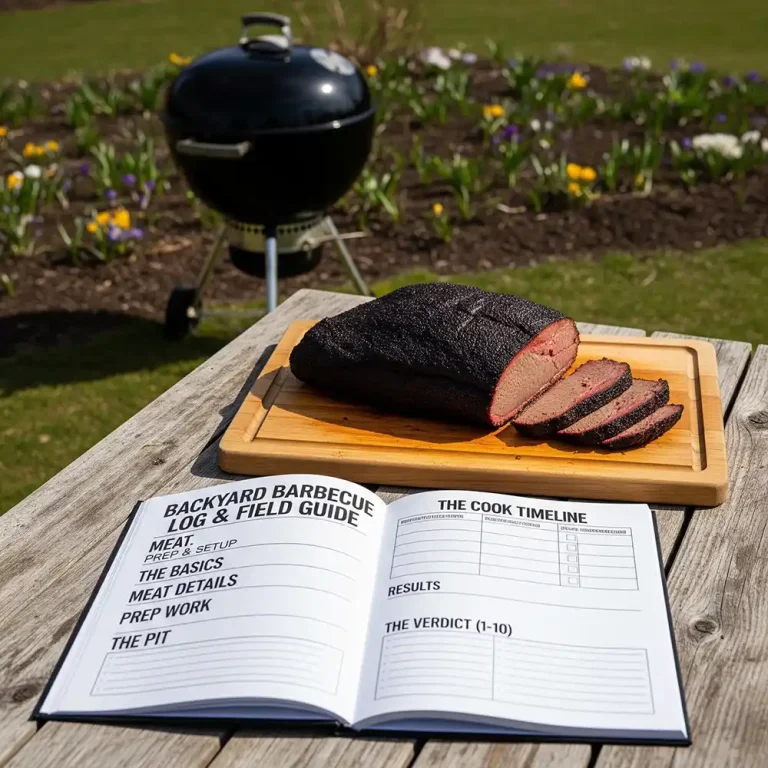
- Logbook Entry: In your Backyard Barbecue Log & Field Guide, record your fuel consumption. Did the 20% extra fuel hold the 350°F zone, or did the wind force you to adjust your intake vents?
- Sub-Zero Tip: If your probe base station is outside, keep it in an insulated bag or a small cooler to protect the battery from the freezing temperatures.
- Technical Recap: This recipe relies on Steady Convection rather than direct radiation. The indoor sauce provides the Maillard complexity that the “No-Sear” outdoor method lacks.
The Verdict
The result is a clean, juicy chicken breast with a sauce that tastes like a “Midnight” reduction. The bitterness of the coffee, the tang of the mustard, and the earthiness of the shiitakes create a profile that stands up to any Northern Michigan winter.
Master the fire. Trust the science. Stay out of the cold.
— Tom
👉 Track your sub-zero cooks in the Backyard Barbecue Log & Field Guide