
In the world of Northern Michigan BBQ, “intuition” is usually just another word for “hoping I don’t ruin this $80 brisket.”
When you’re out on the 22-inch Weber Kettle and the wind is whipping at 15°F and the “RealFeel” is in the single digits, your memory is your worst enemy. You might think you remember exactly how you set your vents last January, but thermodynamics doesn’t care about your feelings.
If you want to move from “backyard hobbyist” to “Science-First Pitmaster,” you need a dedicated pitmaster log book. Here’s why.
Defeat the Memory Trap with a BBQ Log Book
The biggest mistake most people make is thinking they will remember the technical details of a cook six months from now.
- What brand of charcoal did I use?
- Did I pull the pork at 198° or 203°?
- Why was the bark so much better in October than it is today?
A bbq log book isn’t just a diary; it’s a technical data set. By recording your variables, you stop repeating your mistakes and start repeating your successes. You transition from “getting lucky” to “getting results.”
Using a Smoker Log to Manage Michigan’s Extreme Variables
Up here, the environment is never the same twice. A smoker log allows you to account for the “External Load” on your Kettle.
- Ambient Temperature: A Kettle at 75°F in July behaves differently than a Kettle at 10°F in January.
- Humidity: Moisture in the air affects your “stall” time and bark formation.
- Wind: Airflow is the engine of your fire. High winds can pull heat through the steel walls of your grill via convective cooling.
By tracking these in your log, you turn a “wildcard” day into a “controlled experiment.” You learn exactly how many extra briquettes you need when the snow starts falling.
The BBQ Journal as a Science-First Feedback Loop
You cannot improve what you do not measure. When you use a bbq journal, you begin to see patterns that the naked eye misses. You’ll notice that a certain fuel brand burns cleaner, or that a 48-hour dry brine consistently results in a more tender flat than a 24-hour brine. This “Science-First” approach is how you dial in that edge-to-edge pink and obsidian bark.
Technical Breakdown: 5 Variables You Must Track
To make your log book truly educational, you need to track more than just the time. Here are the “Science-First” vitals:
- Fuel Density: Did you use lump or briquettes? Lump provides higher IR heat for searing; briquettes provide more stable ambient temps for long smokes.
- Thermal Milestones: Don’t just log the “done” temp. Log the Glaze Point (when you apply sauce) and the Stall Point (when evaporation slows the cook).
- Vent Geometry: Note your top and bottom vent positions (e.g., “Top 100%, Bottom 25%”). This is the only way to master temp control.
- The “Carry-Over” Rise: Record the temp when you pull the meat vs. the temp after the rest. This tells you how much “Thermal Momentum” your meat has.
- The Post-Cook Audit: Write an honest assessment. Was the fat rendered? Was the bark too salty? This is where the real learning happens.
How My Field Guide Helps
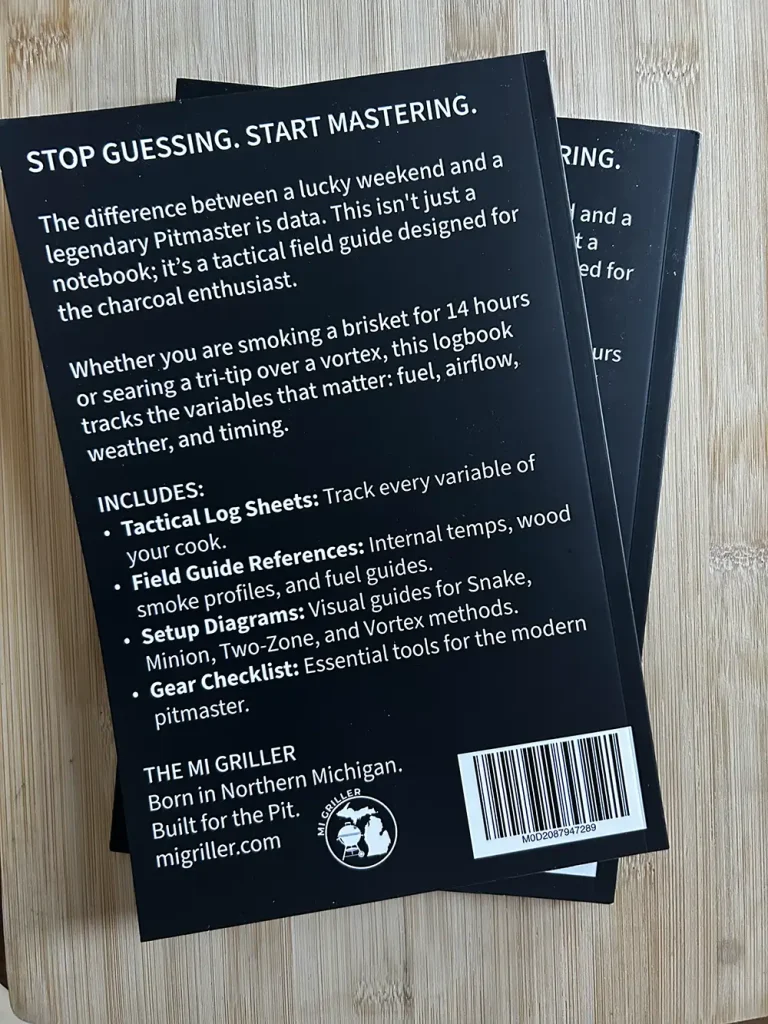
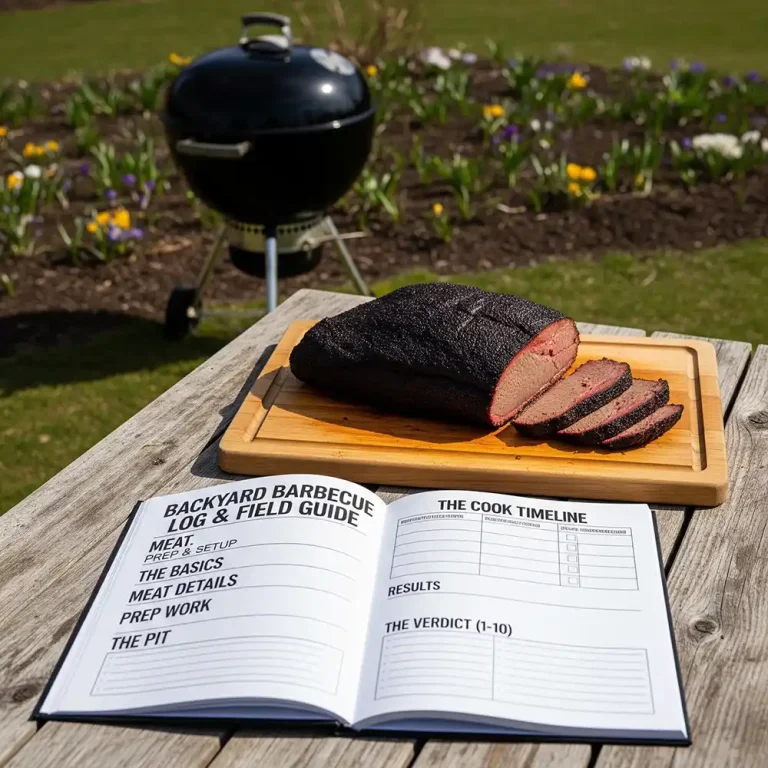
When I designed the Backyard Barbecue Log and Field Guide, I didn’t want a generic notebook. I wanted a technical tool built for the way we actually cook.
- Specific Data Fields: Dedicated spots for ambient temperature, vent settings, fuel types, and thermal milestones.
- The “Rest” Section: Because the rest is 50% of the cook, I included space to track your “Counter-to-Cooler” transition.
- Kettle-Focused: Whether you’re running a 22-inch Weber or a custom offset, the layout is engineered to help you map your thermal momentum.
The Verdict: Don’t Just Cook, Master.
Most people “bbq” by the clock. We master the pit by the data. If you’re ready to take the guesswork out of your next session, it’s time to start your bbq log.
Master the fire. Trust the science.
👉 Order your copy of the Backyard Barbecue Log and Field Guide on Amazon
— Tom