In the “Kettle Kitchen,” we don’t use ingredients just because they sound cool on a menu. We use them because they solve a technical problem.
I get a lot of questions about my Midnight Coffee Rub and the 48-hour coffee soaks I use for my Chuck Roasts. People ask, “Tom, does it make the meat taste like a latte?”
The answer is no. When coffee meets beef, a series of chemical reactions occur that fundamentally change the texture, color, and flavor profile of the meat. This isn’t just “cooking”—it’s an application of organic chemistry.
Here is the “Science-First” breakdown of how coffee affects beef as both a marinade and a rub.
1. The Marinade: Acid, Tannins, and Osmosis
When you submerge a tough cut like a Chuck Roast in strong black coffee for 48 hours, you aren’t just “flavoring” it. You are performing a slow-motion tenderization.
- The pH Factor: Coffee typically has a pH of around 5.0. While it’s not as acidic as vinegar or lemon juice, it is acidic enough to begin denaturing surface proteins. This weakens the tightly wound muscle fibers, allowing for a more tender “pull” once the meat hits the 205°F threshold.
- The Tannin Advantage: Much like red wine, coffee is rich in tannins. These polyphenols bind to the proteins in the beef, helping to “structure” the fat and soften the “iron-heavy” taste common in larger roasts.
- The Osmotic Draw: By adding salt to a coffee marinade, you create an Equilibrium Cure. Over 48 hours in a 38°F refrigerator, the coffee-infused brine travels deep into the muscle. This ensures that the earthy, roasted notes aren’t just on the surface—they are part of the fiber.
2. The Rub: Obsidian Bark and Smoke Adhesion
When you move from the soak to the smoke, the coffee’s role shifts from chemistry to physics.
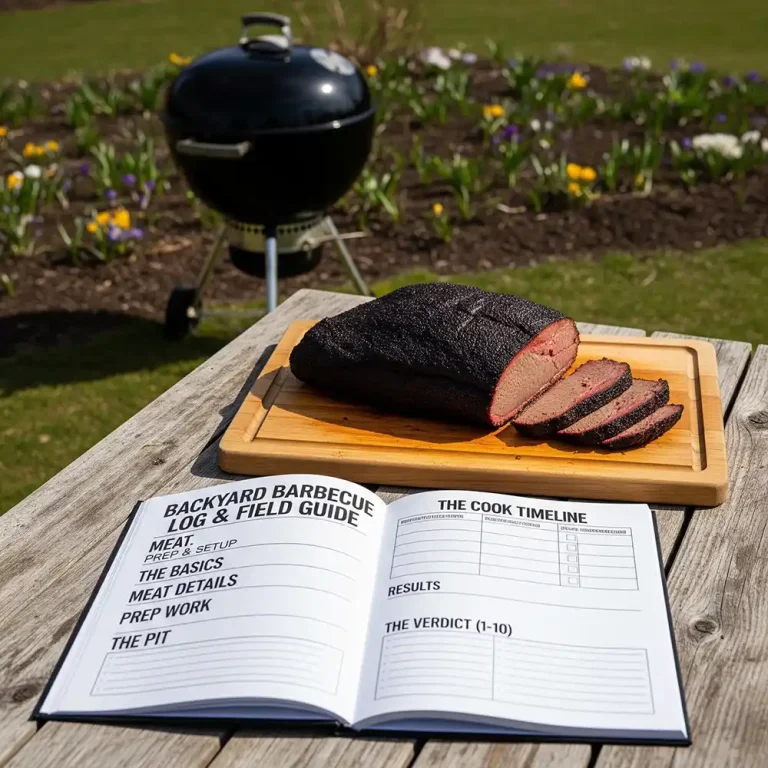
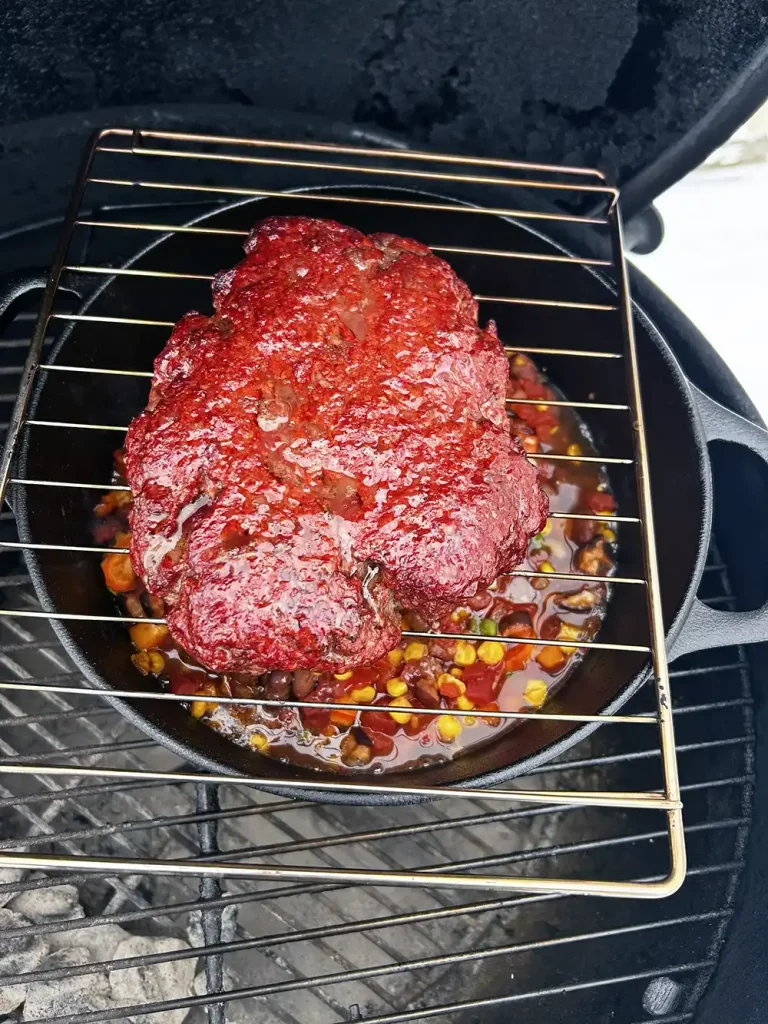
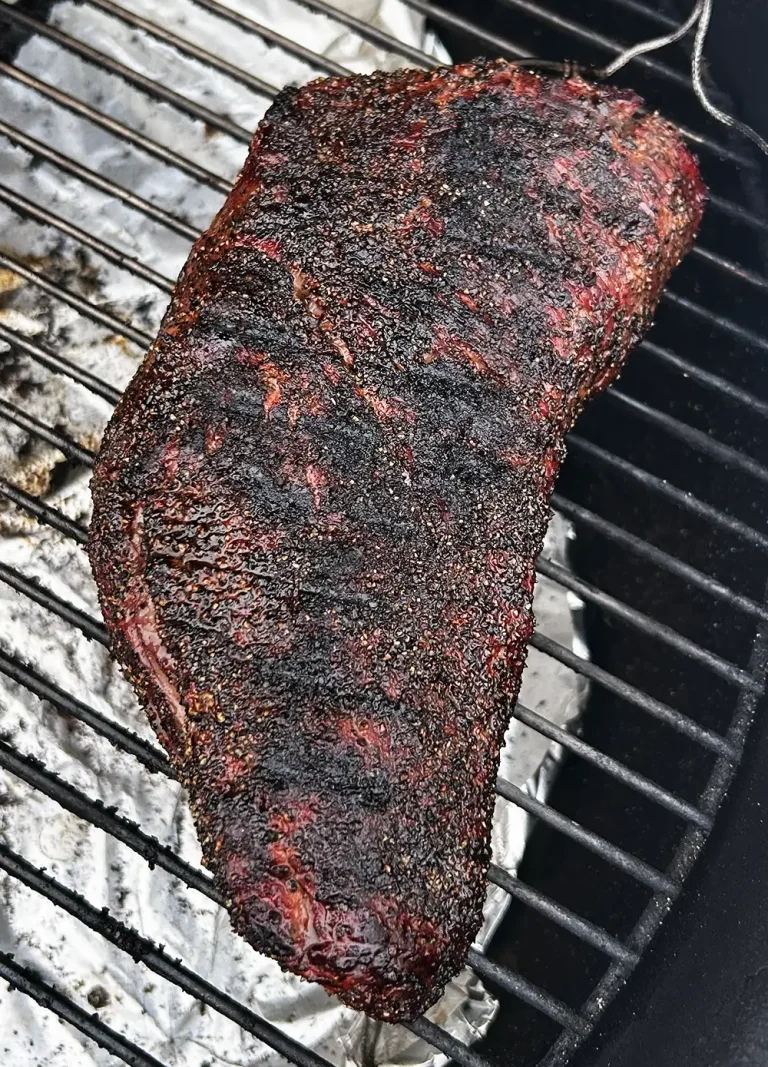
- The Maillard Acceleration: The Maillard reaction—the browning of sugars and amino acids—usually begins around 285°F. However, the dark roasted pigments in coffee (melanoidins) provide a head start. This is how we achieve that “Obsidian Bark” on a 22-inch Kettle even in sub-zero Michigan temperatures.
- Thermal Conductivity: Coffee grounds contain natural oils. As the Kettle reaches its ambient target, these oils “bloom,” acting as a thermal conductor that helps heat move evenly across the surface of the meat.
- The “Smoke Magnet”: Smoke is composed of thousands of tiny particles called phenols. These particles are chemically attracted to tacky, textured surfaces. The coarse texture of a coffee rub provides a massive increase in surface area compared to a smooth, unrubbed roast. The coffee literally “catches” more smoke.
3. The Flavor Bridge: Earth vs. Fat
Beef fat is rich and sweet. Wood smoke is pungent. We need a “Bridge” to connect them.
Coffee provides a bitter “bass note” that cuts through the richness of rendered beef tallow. On a molecular level, the roasted notes of the coffee grounds mirror the roasted notes of the wood-fired charcoal. When you take a bite of a coffee-rubbed Tri-Tip, your palate recognizes the symmetry between the fuel (charcoal) and the seasoning (coffee).
Tom’s “Scout’s Tips” for Coffee BBQ:
- Grind Size Matters: For a marinade, use a coarse “French Press” grind to avoid making the liquid muddy. For a rub, use a “Fine Espresso” grind to ensure maximum surface contact.
- The “Salt-First” Rule: As I always say in my Field Guide, salt your meat separately. If you buy a pre-mixed coffee rub with salt, you lose control over the osmosis.
- The Sub-Zero Hack: In the Michigan winter, a coffee-rubbed bark sets faster. This is vital because every minute you save during the “Bark Set” phase is a minute you aren’t fighting the wind to keep your Kettle at 250°F.
Master the fire. Trust the science. Drink the coffee—but save some for the beef.
— Tom