Grilling a boneless lamb leg is often a “choose your own adventure” disaster for most backyard cooks. Because a boneless leg is an irregular, floppy mass of meat, you usually end up with one side that’s shoe-leather tough and a center that’s still blue.
On a Saturday in Northern Michigan, we don’t do “guesswork.” We do Science-First BBQ. Here is how I tackled a 2lb boneless leg on the 22-inch Weber Kettle to achieve edge-to-edge pink perfection and an obsidian coffee crust.
Geometry is Destiny: The Trussing Strategy
The biggest variable in any cook is Thermal Mass. If your meat is uneven, your heat penetration will be uneven.
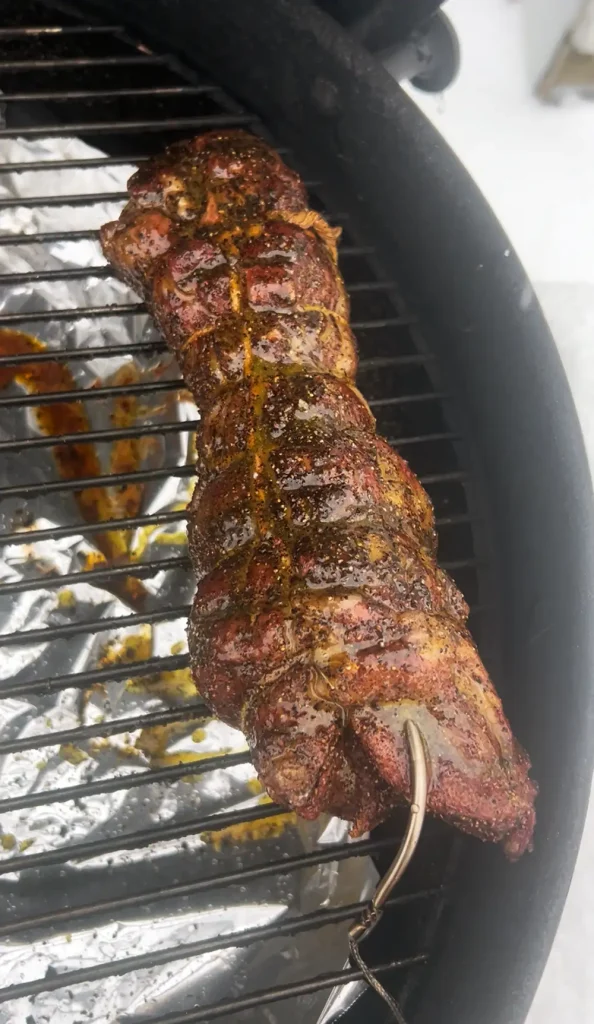
I performed a “Butterfly and Roll” technique, opening the leg up like a book to even out the thick spots, then rolling it into a tight, uniform cylinder. By tying it with butcher’s twine every inch, I created a consistent thermal radius. This meant the heat had to travel the exact same distance to reach the center from every angle.
The “Midnight” Bark (Signature Coffee Rub & Olive Oil)
Lamb is a rich, gamey meat that needs a punchy aromatic profile. I leaned into the MI Griller Signature Coffee Rub for that dark, obsidian look.
- The Binder: I used a thin layer of Olive Oil.
- The Science: The oil acts as a heat conductor and a “tack” for the rub. Because I dry-brined this overnight (salt-first), the muscle fibers were already saturated. The oil helps the fat-soluble compounds in the coffee and spices “bloom” the moment they hit the heat.
- The Salt: Since the dry-brine handled the deep seasoning, I used a salt-free version of my rub. Never double-salt a dry-brined roast!
The “Northwoods Gold” Lacquer
For the finish, I wanted a glaze that would provide a sharp, acidic “cut” to the heavy lamb fat. I whipped up a clean emulsion of Honey, Yellow Mustard, Coarse Black Pepper, and Garlic Powder.
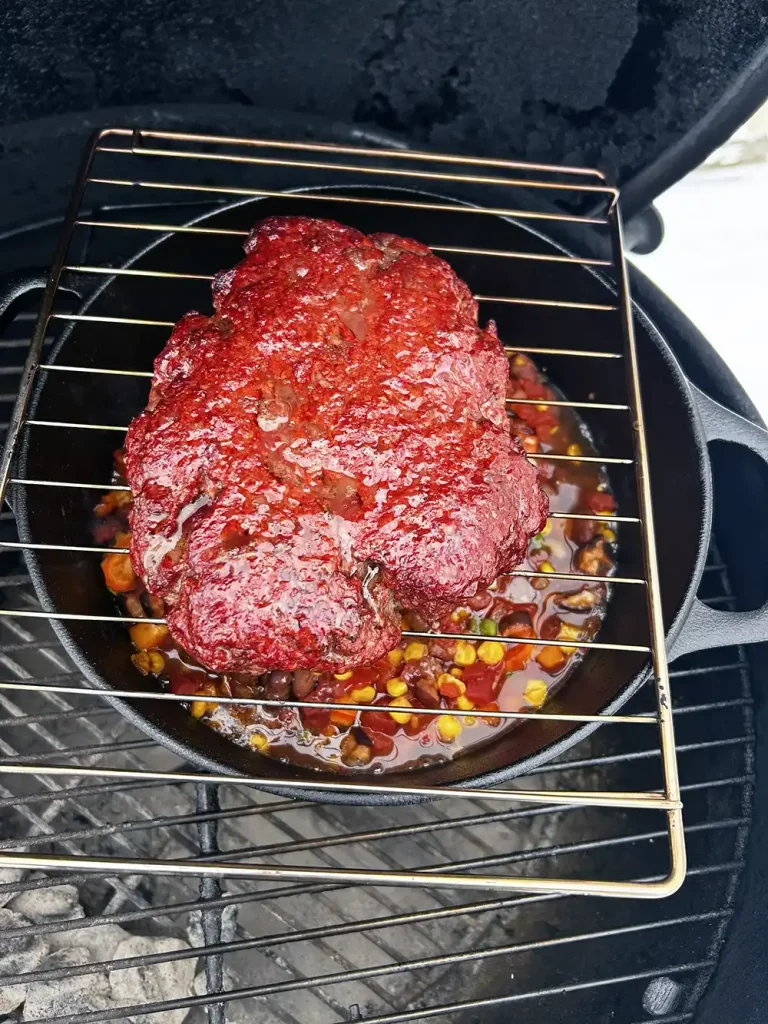
- The Science: Mustard contains lecithin, a natural emulsifier. By whisking it with honey, I created a stable lacquer that stayed “tacked” to the meat during the final sear rather than dripping off into the coals. This created a high-gloss, mahogany finish that locked in the aromatics of the coffee rub.
The Data: Temperature Milestones
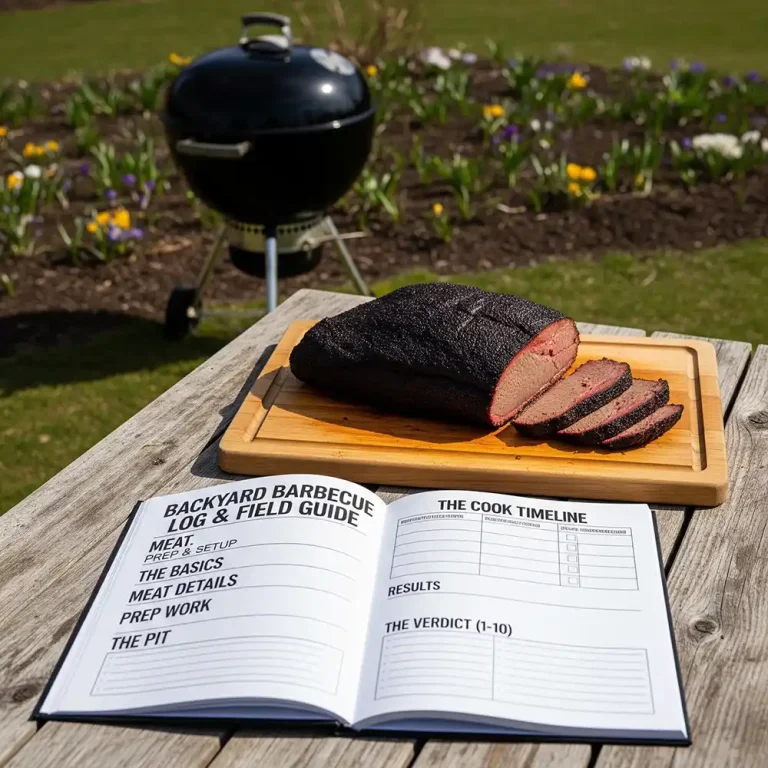
I logged every degree in my Backyard Barbecue Log & Field Guide. In the Michigan cold, tracking your thermal momentum is the only way to win.
- Indirect Smoke: We ran the Kettle at 325°F until the internal hit 120°F.
- The Glaze: I applied the Honey-Mustard lacquer and moved the lamb over the direct coals.
- The Pull: I pulled the roast at 130°F.
- The Rest: 20 minutes indoors. The carry-over cooking pushed the center to a perfect 137°F.
The Verdict
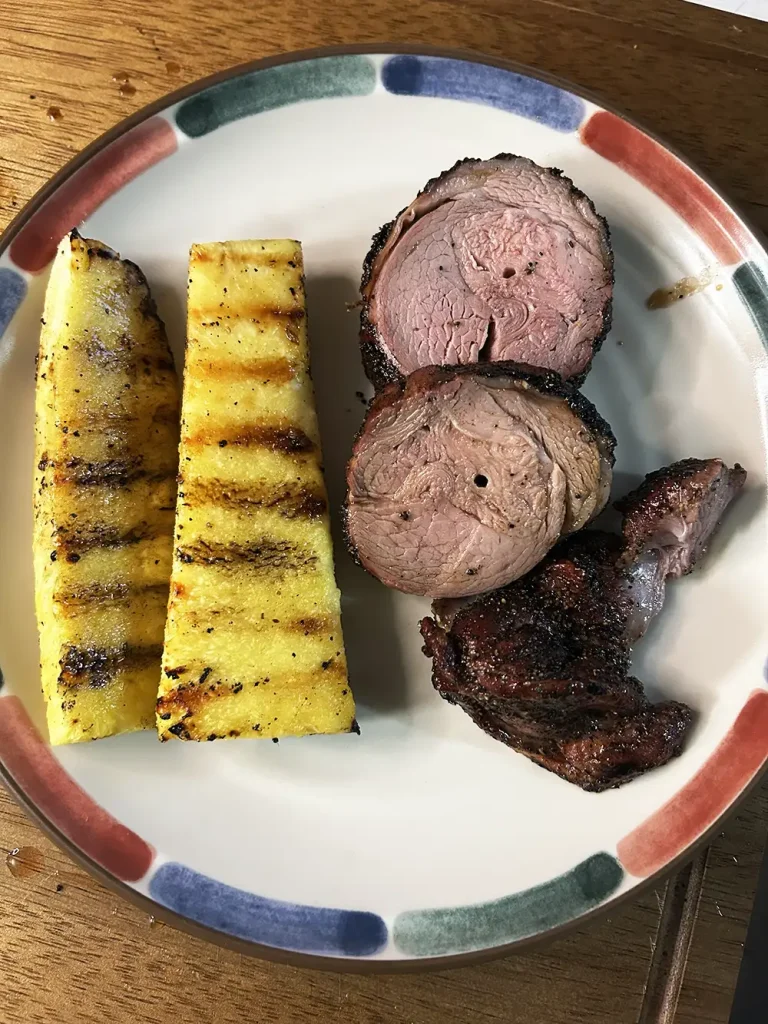
The result was a mahogany-crusted roast that sliced into perfect, juicy medallions. I paired it with fire-roasted fresh pineapple slices to provide a sweet, acidic contrast to the savory bark. The bitterness of the coffee rub acted as a foil to the sweetness of the honey, and the yellow mustard provided that essential “tang” that makes lamb pop.
Master the fire. Trust the science.
Want to see the full log entry for this cook? Grab a copy of the Backyard Barbecue Log & Field Guide on Amazon and start tracking your own path to pitmastery.
— Tom