There’s a common debate in the BBQ world: Do you smoke a tri-tip like a brisket 203° or grill it like a steak?
When it’s a crisp Northern Michigan afternoon with a Real Feel of 17°F, the “Science-First” answer is clear: The Reverse Sear. This method allows you to develop the deep, smoky bark of a brisket while maintaining the juicy, edge-to-edge medium-rare pink of a high-end roast.
Here is how I tackled the “Midnight Tri-Tip” on my 22-inch Weber Kettle.
The “Salt-First” Philosophy
One of the most important lessons I’ve logged in my Field Guide this year is the importance of seasoning in stages. I use my MI Griller Coffee Rub, but I specifically make it without salt.
The Reason: Salting first allows me to control the moisture retention of the meat independently of the flavor profile. I hit the tri-tip with a dry brine of kosher salt to lock in those juices, then followed up with the coffee rub to build that signature “obsidian” bark.
The “Hot and Fast” Indirect Smoke
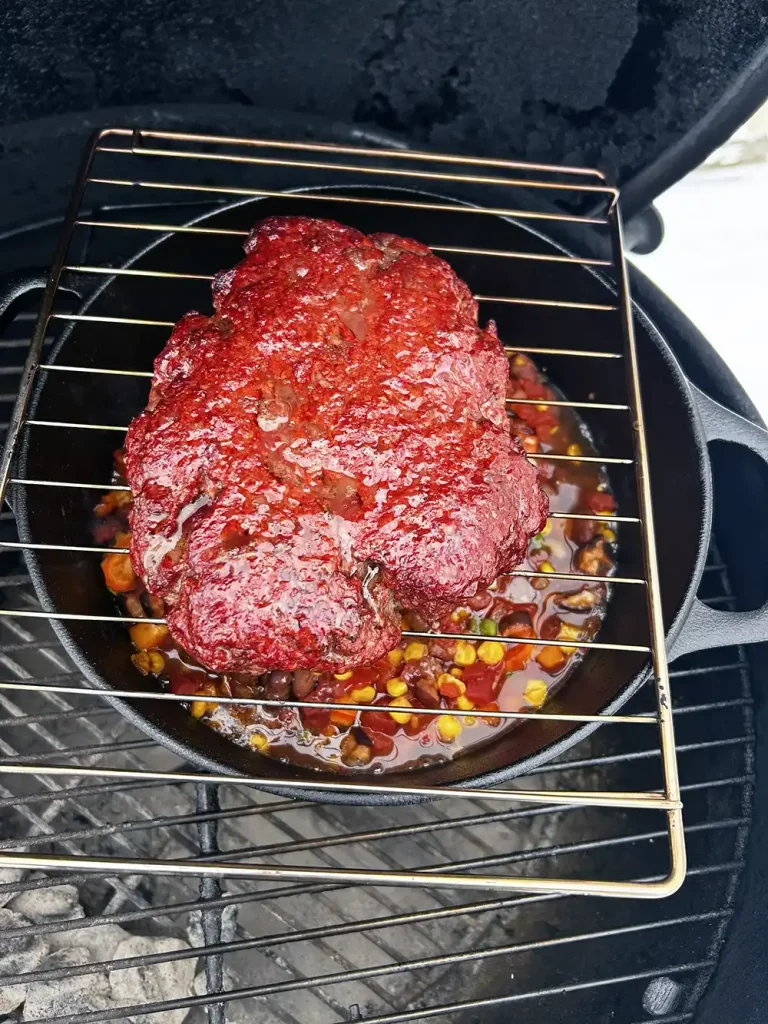
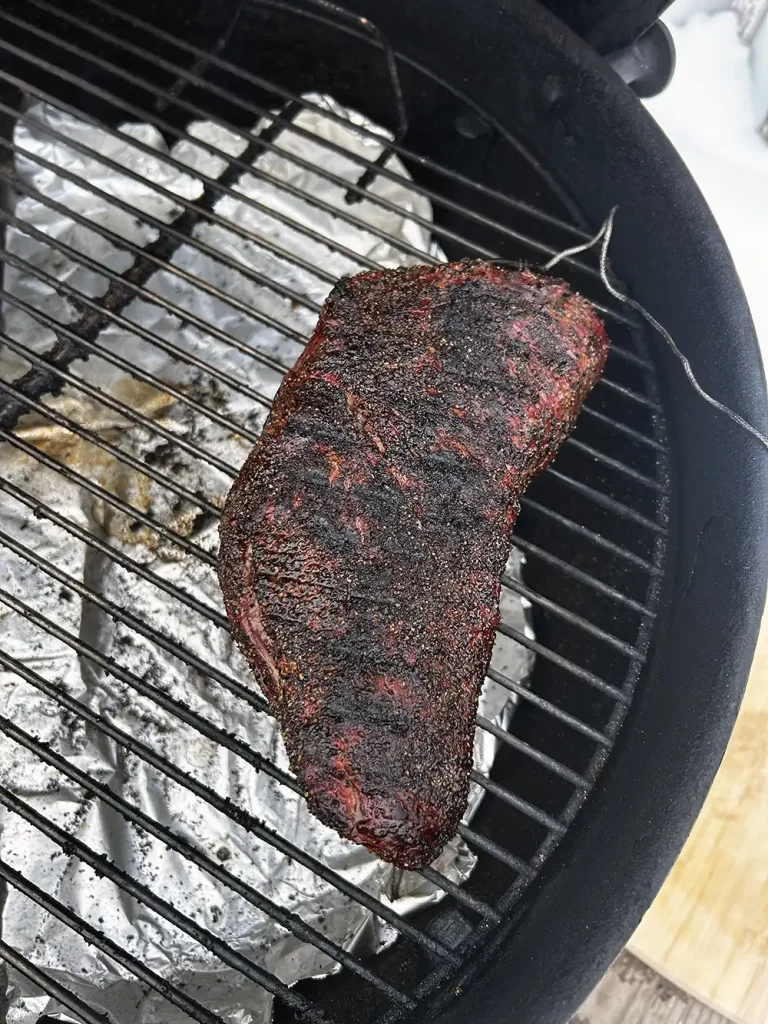
I set the Kettle up for a two-zone cook using Kingsford charcoal. Even though it was slightly warmer today at 17°F, I still decided to push the ambient temperature higher than a traditional low-and-slow smoke to combat the winter air. I held the indirect zone between 300°F and 350°F.
The Science: In the Michigan winter, running a hotter indirect zone helps the fat render more efficiently and prevents the “surface cooling” effect that happens when freezing air hits the grill. It also speeds up the Maillard reaction on that coffee rub, setting the bark much faster.
I relied heavily on my remote probes—in this weather, if you’re looking, you’re losing heat. I let the tri-tip take that “hot smoke bath” until the internal temperature reached exactly 115°F.
The High-Heat Finale
Once we hit 115°F, it was time for the transformation. I opened the vents wide and moved the tri-tip directly over the glowing charcoal for the final sear.
The secret here is the 60-second flip. By flipping the meat every minute, you build a stunning, even crust without overcooking the layer of meat just beneath the surface. I pulled the roast the second it hit 130°F.
The Result
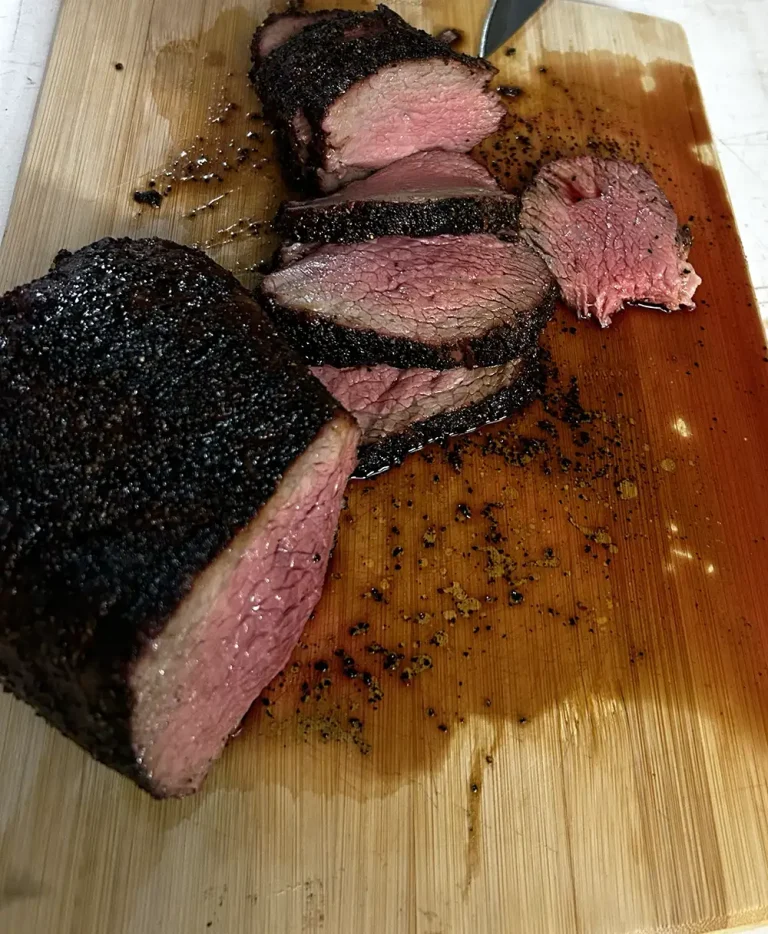
After a 15-minute rest inside the warm kitchen, the temperature settled at a perfect 135°F.
The coffee rub combined with the 350°F indirect heat created a bark so dark and savory you’d swear it was a 12-hour brisket, but the slice revealed a tender, juicy center that melted like butter. Paired with some foil-packet oyster mushrooms, it was the ultimate way to kick off 2026.
Pitmaster’s Note: Remember that the grain on a tri-tip changes direction at the “elbow.” Always slice against the grain to ensure every bite is as tender as possible.
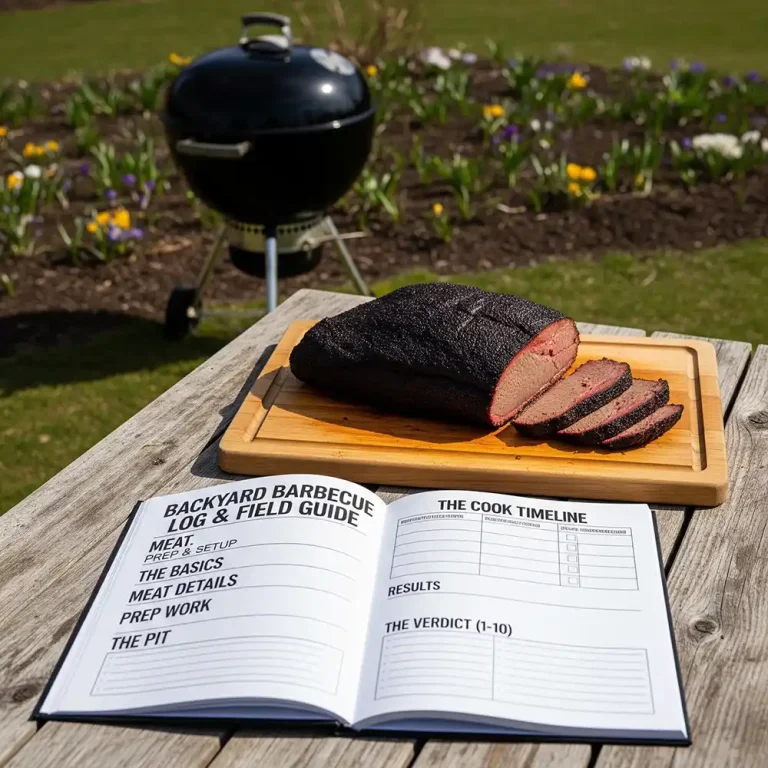
Want to track your own temperature swings and rub experiments? Grab a copy of my Backyard Barbecue Log and Field Guide on Amazon and start logging your journey.
— Tom