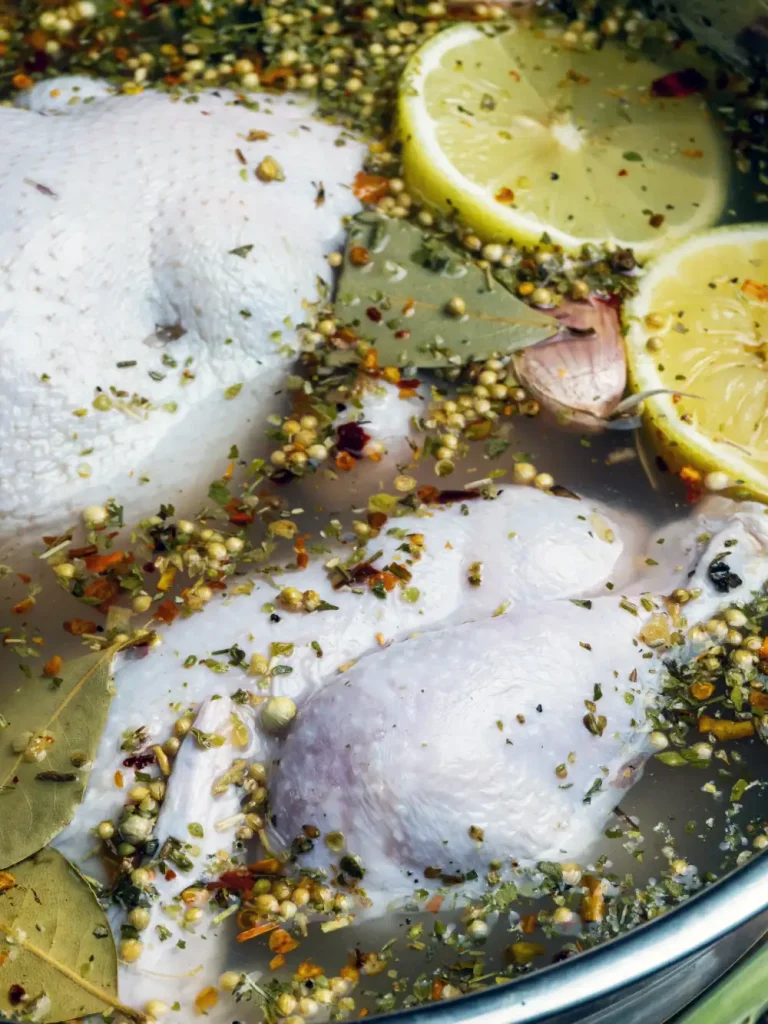
In the world of BBQ, if dry brining is the secret to a world-class crust, then wet brining is your ultimate insurance policy. It is the best method to ensure that lean, temperamental meats—like Thanksgiving turkeys, double-cut pork chops, and chicken breasts—come off the Weber Kettle juicy and tender every single time.
As any Northern Michigan griller knows, when you’re fighting 17 deg ambient temperatures, your grill’s heat can be unpredictable. A wet brine provides a moisture buffer that protects your meat from drying out, even if your cook goes a little longer than planned.
The Science: How a Wet Brine “Injects” Moisture
Unlike a dry brine, which focuses on surface evaporation to create a pellicle, a wet brine uses osmosis and protein denaturing to physically increase the weight of the meat before it ever hits the grates.
1. The Power of Osmosis
When meat is submerged in a solution with a higher salt concentration than its own cells, the salt and water move into the muscle fibers. This isn’t just surface-level; over several hours, the brine migrates deep into the center of the cut.
2. Protein Denaturing (The Tenderizer)
Salt causes the tightly wound muscle proteins to unravel or “denature.” As they unravel, they create a loose, web-like matrix that traps the absorbed water. Instead of the muscle fibers tightening and squeezing out juices as they heat up, these relaxed proteins hold onto that liquid, resulting in a significantly juicier final product.
The MI Griller “Golden Ratio” Brine
This is the foundational recipe. Once you master this ratio, you can customize it with aromatics to suit any meal.
| Ingredient | Ratio | Purpose |
| Water | 1 Gallon | The carrier for flavor and salt. |
| Kosher Salt | 1 Cup | The engine that drives the osmosis. |
| Brown Sugar | 1/2 Cup (Optional) | Balances salt and aids in surface caramelization. |
Note on Sugar: While salt does the heavy lifting for moisture, sugar helps balance the salinity and promotes better browning (Maillard reaction) once the meat hits the heat. If you are watching your sugar intake, feel free to omit it; the brine will still effectively tenderize the meat.
Flavor Variations & Aromatic Add-ins for Wet Brine
Beyond the salt and water, you can “infuse” your meat with aromatics. Here are some of our favorite combinations:
- The Cider Brine (Great for Pork Chops): Replace 2 quarts of water with 2 quarts of apple cider. Add 2 cinnamon sticks and 1 Tbsp of cloves.
- The Poultry Punch: Add 4 smashed garlic cloves, 1 Tbsp of black peppercorns, 3 bay leaves, and a handful of fresh rosemary.
Other Flavor Options to Mix & Match:
- Citrus (Lemon, Orange, Lime): Sliced citrus fruits add a bright acidity that works wonders on chicken and seafood. Pro-tip: Squeeze the juice into the brine and then drop the rinds in as well.
- Alliums (Garlic & Onion): Smashed garlic cloves or quartered onions provide a deep, savory baseline for any meat.
- Sweetener Substitutes: Swap brown sugar for Northern Michigan Maple Syrup, honey, or molasses for a more complex, local flavor profile.
- Fresh Herbs: Thyme, sage, and oregano are poultry classics. For pork, try adding a few sprigs of fresh dill.
- Spices: Whole black peppercorns, mustard seeds, red pepper flakes (for heat), or even star anise for a unique earthy note.
Step-by-Step: The Foolproof Wet Brining Process
1. The Hot Start (Dissolving)
Salt and sugar do not dissolve well in cold water. Bring 1 quart of your gallon of water to a boil. Whisk in the salt and sugar until the liquid is clear.
2. The Cold Shock (Crucial Safety Step)
Never put raw meat into warm brine. It creates a danger zone for bacterial growth. Once the salt is dissolved, add the remaining 3 quarts of ice-cold water to the pot to bring the temperature down immediately. Refrigerate the brine until it is below 40 deg F.
3. The Submerge
Place your meat in a food-safe bucket, a large glass bowl, or a heavy-duty brining bag. Pour the cold brine over the meat until it is completely submerged. If the meat floats, weigh it down with a heavy plate.
4. The Rinse and Dry (Don’t Skip This!)
After the brining time is up, remove the meat and rinse it thoroughly under cold running water. This removes excess surface salt that would otherwise make your gravy or bark too salty. Pat the meat aggressively dry with paper towels before seasoning with your favorite rub (just remember to go light on the salt in your rub!).
Wet Brine Timing Chart: When to Pull
Brining for too long can result in “mushy” meat or a “ham-like” texture. Follow these guidelines for the best results:
| Cut of Meat | Brining Duration | Notes |
| Whole Turkey | 12 – 24 Hours | Use a dedicated brining bag in a cooler. |
| Pork Tenderloin | 4 – 8 Hours | Transforms lean pork into something spectacular. |
| Pork Chops (1″+) | 2 – 4 Hours | The #1 secret for juicy chops on the kettle. |
| Chicken Breasts | 1 – 2 Hours | Perfect for quick weeknight grilling. |
| Shrimp / Seafood | 30 Minutes | Use salt only; improves snap and texture. |
Wet Brining vs. Dry Brining: Which One Do You Need?
- Choose Wet Brining if: You are cooking exceptionally lean meat (Turkey, Pork Loin, Chicken Breast) and your primary goal is moisture and tenderness.
- Choose Dry Brining if: You are cooking fatty cuts (Brisket, Ribeye) or want maximum crispy skin (Spatchcock Chicken).
Wet Brine Common Mistakes to Avoid
- Using Table Salt: Table salt is much “saltier” by volume than Kosher salt. If using table salt, cut the amount by half.
- Using Reactive Containers: Avoid aluminum or copper pots. The salt and acid will react with the metal and give your meat a metallic taste. Use food-grade plastic, glass, or stainless steel.
- Over-Brining: Stick to the clock. A chicken breast left in brine for 12 hours will lose its meaty texture.
Pitmaster Note: “A wet brine is the difference between a dry, forgettable holiday turkey and the one your family talks about for the next ten years. It’s a simple step that pays massive dividends once the smoke clears.”